Sustainability, green, carbon footprint — these terms have come to define a growing movement in our nation, but their definitions remain general. By asking component suppliers, OEMs and associations what sustainability means to them, we found each response to hold a unique and personal definition.
The following three questions were asked to better frame and define each company's involvement and motivations behind the 'Green Movement':
Define the word sustainability as it applies to your company/association and particular niche in the mobile off-highway industry.
In what ways is your company working to improve its carbon footprint? What is your motivation?
What are you doing to ensure each product you produce is better for both the consumer and the environment?
National Biodiesel Board
National Biodiesel Board
Don Scott, Director of Sustainability
In February 2008 the National Biodiesel Board (NBB) established the Sustainability Task Force to guide its membership in ongoing efforts to assess and improve environmentally, economically, and socially responsible biodiesel production.
The Sustainability Task Force established the following definition for sustainability: "Meeting today's needs for environmental stewardship, economic prosperity, and quality of life without compromising future generations' ability to meet these needs for themselves."
Sustainable biodiesel demonstrates environmental stewardship across its lifecycle by maximizing net energy balance and minimizing negative impacts on natural ecosystems, globally and locally; Adds value, creates wealth, and enhances quality of life for the entire community of stakeholders.
The NBB is the trade association representing the U.S. biodiesel industry as the coordinating body for research and development. As such, we work with users, producers, and manufacturers to maximize current and future opportunities to utilize biodiesel as a renewable and sustainable fuel in all aspects of operation.
The National Biodiesel Board is committed to safeguarding our planet's valuable resources. The biodiesel industry is built on sustainable practices in the production of a fuel that is proven to lower greenhouse gas emissions and provide energy from a renewable resource.
Founded to offer a healthier, homegrown fuel, invigorate economies throughout the U.S. and increase energy independence, the U.S. biodiesel industry has consistently sought to provide a sustainable solution to America's energy needs. Biodiesel offers significant greenhouse gas emissions reductions compared to its petroleum counterpart and has one of the greatest energy balances of any fuel available. U.S. regulations ensure that domestic biodiesel meets rigorous standards relating to environmental stewardship, stakeholder input, fair labor practices, and safe working conditions.
Biodiesel creates meaningful jobs, strengthens our economies and increases energy and homeland security. By stimulating investment in agriculture, improving the economics of crop and animal agriculture (especially in developing counties) and augmenting supplies of protein critical to combating malnutrition, biodiesel strengthens food security.
Biodiesel is already one of the most sustainable fuels available today. And still one of its most compelling attributes is that it is a young industry with the opportunity to play an even greater role in a sustainable energy future. The US biodiesel industry is not only generating a product with documented health and environmental benefits, it has aggressively committed to continually increase its sustainability. As the science to measure the sustainability of renewable fuels develops and as our industry matures, NBB seeks to ensure a more sustainable future for our country and our industry by establishing the following sustainability principles:
1. Biodiesel production shall follow all applicable laws of the jurisdiction in which it is produced.
2. Biodiesel projects shall be developed and operated under appropriate, transparent, and participatory processes that involve all relevant stakeholders.
3. Biodiesel shall contribute to climate change mitigation by significantly reducing lifecycle greenhouse gas emissions as compared to fossil fuels. Producers shall strive to continuously improve that reduction.
4. Biodiesel production shall support human rights and labor rights, and shall ensure safe and decent working conditions.
5. Biodiesel production shall contribute to the social and economic development of local communities.
6. Biodiesel production shall strive to improve food security.
7. Throughout the supply chain, the biodiesel industry shall implement management systems that maintain and strive to improve biodiversity, areas of High Conservation Value, and the quality of natural resources such as soil, air, and water.
8. Biodiesel production shall respect natural resource rights, such as land and water rights.
9. All participants throughout biodiesel supply chain shall be dedicated to the ideal of continuous improvement. Members shall, through ongoing efforts, make advancements in the economic, social and environmental performance of the industry.
Biodiesel is a part of the sustainability solution, driving research that increases crop yields, improves supplies of protein and provides higher outputs for food and feed on the exact same acres of land.
Biodiesel is also among the most powerful tools to fight carbon emission, chipping away at the largest contributor of greenhouse gas emissions-fossil fuels. In fact biodiesel has a 78% life cycle carbon reduction according to the USDA/DOE. Using biodiesel in everyday operations, purchasing and developing new products engineered with biodiesel in mind, and using the highest blends of biodiesel possible are all ways businesses can quickly and easily ensure products are better for both the consumer and the environment.
U.S. Biodiesel Industry supports sustainability in the following ways:
- Biodiesel can be made from a wide range of sustainable feedstocks such as recycled cooking oil, animal fats, and vegetable oils from other oilseed crops, waste greases, and algae.
- The increased demand for biodiesel is stimulating research and investment in developing new feedstocks such as algae, camelina, jatropha and arid land crops. We are seeing increased yield with lower inputs on existing acres and may see additional feedstock volumes from new crops on marginal lands.
- The biodiesel industry supports sustainable agricultural practices, such as no-till farming, which has increased dramatically both in terms of percentage and actual acreage since 1990.
- Furthermore, for every gallon of biodiesel that is consumed reduces Greenhouse Gas Emissions by displacing petroleum. Last year's 700 million gallon production of this fuel biodiesel reduced greenhouse gas emissions the equivalent of removing 980,000 vehicles from US roads.
- Biodiesel's Additional Public Health and Energy Security Benefits are Substantial and Well-Documented.
- Reduction in Regulated Emissions including PM, CO, HC. Toxicity of exhaust is less than conventional diesel.
- Biodiesel has virtually no sulfur and is naturally high in oxygen, cetane, and lubricity, which makes it burn cleaner with less engine wear.
- Unlike many other alternative fuel solutions, such as vehicle electrification, biodiesel is affordable and the technology (diesel engines) and fuel is widely available for people to use today.
Click here to learn more about the National Biodiesel Board's Sustainability views and principles.
Deere & Co.
Laurie Zelnio, Director, Safety & Environment
For 172 years, John Deere has helped ensure a quality of life by offering solutions to those who produce our food, fiber and fuel; build our homes and infrastructure; and beautify and protect our environment.
Deere is a global provider of advanced products and services for agriculture and forestry, and a major provider of products and services for construction, lawn and turf care, landscaping and irrigation. With operations in 32 countries, Deere's focus on improving productivity and efficiency brings sustainability to customers throughout the world.
We take enormous pride in our product sustainability efforts, including:
- A focus on machine productivity that allows a single John Deere combine to replace two to three outdated, less-efficient machines, especially in growing agricultural economies like Russia; and cut-to-length forestry harvesting, which enables mills to meet requirements with greater accuracy and less waste.
- Advanced positioning, automation, and irrigation technologies that increase precision, reduce inputs (water, fuel, fertilizer, seed and pesticides) and minimize passes through a field, or inroads into a forest, reducing environmental impact.
- Conservation tillage systems that limit soil disturbance, sequester carbon, improve soil quality, and conserve water, while frequently increasing crop yields.
- Researching and promoting alternative energy - besides using biodiesel to fuel new products and promoting its development and use, the company has significant interest in alternative energy sources, including wind energy and woody biomass technologies.
- Fuel-efficient and productive equipment, including the 2500E hybrid riding greens mower that provides approximately 10% better fuel economy compared to a standard diesel-hydraulic greens mower; and the 744K 4WD loader that reduces fuel consumption 32% despite increasing machine weight and engine power.
As stewards of the land, Deere rigorously applies environmental stewardship to its own business. From Deere's adoption of its corporate environmental policy in the 1960s to its continued efforts today in energy efficiency, water and air quality, and supplier footprint activities, Deere has remained committed to sustainable practices. In 2008, in conjunction with its participation in the U.S. EPA's Climate Leaders Program, Deere announced plans to further reduce its total global greenhouse gas emissions by 25% per dollar of revenue from 2005 to 2014.
The John Deere Foundation, the company's primary philanthropic arm, supports "Solutions for World Hunger" through the following programs:
- KickStart - manually operated irrigation pumps for subsistence farmers in Africa
- World Food Prize - grants for major breakthroughs in feeding the world's poor
- Human Needs and Global Resources - Wheaton College mission program to promote sound agricultural practices
- Opportunity International - micro-loans for agricultural programs in Malawi and Mozambique
- BackPack Program - supplemental children's food program in several John Deere communities in the United States
Our mission of distinctively serving customers - those linked to the land - affects how we do business. As the company delivers quality products and services, it does so mindful of its commitment to serving global communities and society at large, and to minimizing environmental impact. By operating in this manner, we seek to ensure that our actions result in performance that endures.
Learn about John Deere's Interim Tier 4/Stage IIIB Technologies here.
Watch a short 3-minute video from John Deere about its Interim Tier 4 technology solutions.
Click here to learn about John Deere's corporate commitment to the Environment, Health and Safety.
Kenworth Truck Co.
Jeff Parietti, PR Manager
Kenworth Truck Co., Kirkland, WA, recently received its largest hybrid truck order ever. The order from Coca-Cola Enterprises, the world's largest manufacturer and distributor of Coca-Cola products, is for 150 Kenworth T370 diesel-electric tractors and 35 Kenworth T370 hybrid trucks, all of which will be on the road this year. The Kenworth T370 tractors (rated at 55,000 lb. GCW) are the largest hybrid delivery truck on the road in North America.
"Coca-Cola Enterprises' commitment to deploy fuel-saving Kenworth hybrid tractors and trucks into the North American market is a demonstration of corporate responsibility and sustainability," says Bill Kozek, Kenworth general manager and PACCAR vice president. "We are very pleased to partner with Coca-Cola Enterprises to save fuel and reduce emissions."
Coca-Cola Enterprises has already achieved increased fuel efficiency and decreased emissions on its original order of 120 Kenworth T370 hybrid beverage delivery trucks deployed throughout the United States and Canada last year. "The Kenworth hybrids are performing well, with a more than 30% improvement in both fuel efficiency and greenhouse gas emissions, compared to standard beverage delivery trucks," says Gary Kapusta, the company's vice president of indirect procurement, who notes that Coca-Cola Enterprises operates the largest hybrid fleet in North America.
Coca-Cola Enterprises' Kenworth T370 hybrids are equipped with a PACCAR PX-6 engine, rated up to 280 hp and up to 660 lb.-ft. of torque, and the Eaton diesel-electric hybrid power system. The hybrids also have an integral transmission-mounted motor/generator and frame-mounted 340-volt, lithium-ion battery pack. Advanced powertrain controls monitor driving conditions and automatically select the ideal power mode, smoothly switching among electric only, combined diesel and electric, and diesel only power modes.Electricity generated through regenerative braking is stored and used for acceleration, assisting
the diesel engine. The hybrid system is monitored through a dash display. As the power requirements for different driving conditions change, the screen constantly updates the driver on system status.
For more information about Kenworth's hybrid truck contract with Coca-Cola Enterprises, see the press release at www.kenworth.com/6100_pre_mor.asp?file=2388.
Environmental Program
Kenworth's comprehensive environmental program is focused on alternative fuels, hybrid technologies, idle reduction, aerodynamic performance, driver awareness technologies, and manufacturing facilities.
"High diesel fuel prices and new environmental rules will drive innovative new technologies in the commercial vehicle market," says Preston Feight, chief engineer for Kenworth Truck Co. "Kenworth is recognized as a technology leader and we are introducing practical solutions for these market realities."
The company's latest environmental product involves trucks fueled by liquefied natural gas (LNG). Kenworth will expand its presence in the growing LNG truck market by beginning production of Kenworth T800 LNG trucks in 2009.
Red Dot Corp.
Robert Gardiner, Marketing Manager
Defining Sustainability
If you were to go back 45 years and ask Red Dot, Seattle, WA, founder Harky Runnings to define "sustainability," he would have talked about business: how to keep your customers happy, retain your best managers and workers, make good products and keep costs down. That's how to "sustain" and build a company.
Today, we see sustainability—in the environmental sense—as a benefit of long-held business practices that support our customers and employees.
For example, in the early 1970s, when Red Dot became one of the first manufacturers to use a 10-hour per day, four-day work week, it wasn't to reduce the factory's carbon footprint or employee commuter miles. There was no banking or shopping on weekends back then, and the company wanted to give people time for personal business on Friday. It also eliminated two costly production starts and stops and cut down on energy bills.
When Red Dot adopted lean manufacturing principles, our goal was to be more efficient. It just so happens that, as an environmental benefit, lean minimizes the waste of our raw materials. Our company is vertically integrated, meaning we can design, build, test, and assemble the components that comprise our HVAC products. As a result, our products fit better, reducing the risk of refrigerant leaks. We also perform functional and pressure tests on all final assembly units, evaporators and other components.
Sustainability and Mobile A/C
In the United States alone, vehicle air conditioners consume 7 billion gallons of fuel every year, equivalent to 16 million metric tons of carbon equivalent (MMTCE). R-134a, the refrigerant used in most mobile air conditioning systems, ultimately will be phased out by regulators. Alternatives that would perform well in passenger cars—by far the majority of the vehicle market—wouldn't meet the demands of off-highway applications.
For the past five years, we've championed the idea that we need one refrigerant that can be used all over the world in many types of vehicles, including off-highway equipment. In 2004 Red Dot introduced the first heavy-duty mobile A/C system to use HFC-152a, and in 2007 we received the prestigious Climate Protection Award from the U.S. EPA for our work with refrigerants that reduce greenhouse gases.
Refining the Product Line
Each year refrigerant leakage adds 8.7 MMTCE to atmospheric emissions of greenhouse gases. We offer a range of products to help equipment owners reduce the risk leaks. Some are high-tech, like ProTecht, which monitors refrigerant pressures and shuts down the system in case of refrigerant loss or a system malfunction. Others are low-tech, like EZ-Clip quick-connect hose fittings. In either case, an HVAC system that's free from leaks not only is good for the environment, it makes for a more satisfied end user.
On average, an idling truck engine burns one gallon of diesel fuel per hour and produces 21 tons of CO2 and 0.3 tons of NOx a year. To help truck operators save fuel and reduce idling, we now distribute Glacier Bay's ClimaCab, an EPA SmartWay-approved battery-powered HVAC system.
We integrate environmental responsibility into our daily operations (by reducing packaging materials and recycling shipping containers, for example) and we're committed to attaining ISO:14000 certification. But ultimately, we see sustainability as a byproduct of sound business practices developed over a 45-year history.
Eaton Corp.
Edited by OEM Off-Highway
Developing sustainable business practices is not only critical to the future of our company, but also for the benefit of future generations. Sustainable practices are leading Eaton to sustainable growth, both profitably and responsibly. We're working to reduce our carbon footprint at company facilities. Our employees are guided by a strong set of ethical principles. We're designing sustainability into our products and manufacturing processes, and helping customers and suppliers do the same. These and other sustainable practices are helping Eaton make a bigger impact in the marketplace, while leaving a smaller footprint on the world.
Eaton places the highest priority on the health and safety of our people and on environmental and energy conservation programs that benefit the communities in which we live and work.
This commitment to Environment, Health and Safety (EHS) excellence goes far beyond compliance with existing regulations. We wish to become recognized as an industry leader in creating safe workplaces and conserving world resources.
EHS and Green Leaf
Eaton has been a dedicated EHS proponent for years. In fact, we were among the first diversified industrial companies to pursue global ISO 14001 certification — a rigorous standard for managing and improving environmental performance. Today, virtually all of Eaton's facilities worldwide have earned this designation and many have also achieved OHSAS 18001 certification for workplace health and safety.
To build on these successes, we launched a Global Management System of Environment, Safety, Security and Health in August 2005. The global program — known as MESH — integrates all of Eaton's EHS programs under one management system that eliminates duplication and creates a common set of standards. MESH has become an integral part of the Eaton Business System and a critical measure of each facility's business performance.
Eaton also participates in a number of volunteer government partnership programs, including EPA's Performance Track, OSHA's Voluntary Protection Program, and Mexico's Industria Limpia program. In 2006, Eaton joined the Green Suppliers Network, a public-private partnership with the EPA and U.S. Department of Commerce, through which we help small and medium-sized suppliers who serve our businesses to develop "lean and clean" manufacturing processes.
As Joseph Wolfsberger, Senior Vice President - Environment, Health and Safety states on Eaton's website, "Eaton has a heritage of sustainable business practices as part of the company's philosophy of doing business right. We're committed to doing what's right in protecting the environment, our people and our communities everywhere that we operate around the world.
"We believe that public expectations are changing and that in the future companies will not be expected to merely minimize their impact on the environment and people's lives, but will instead be looked upon to be a positive impact on the world. This change in expectation is consistent with Eaton's core values.
"Our goal is to achieve world-class performance in EHS practices. Through MESH, we adhere to the same high standard of excellence at our facilities around the world.
"Our sustainable practices began with efforts to reduce waste, evolved into programs to reduce energy consumption and have expanded to all aspects of EHS at our global facilities. MESH puts the measurements behind our efforts and serves as a springboard to better performance and best practices. In 2008, four facilities earned the first-ever Eaton EHS awards recognizing their results achieved since they began using MESH. More than 180 facilities worldwide were eligible for the award.
"In addition to our pledge to reduce greenhouse gas emissions by 18% by 2012, we have also set goals to reduce water consumption and waste generation and to achieve world-class ranking in workplace safety. In fact, we improved our EHS performance in 2007 in every performance metric on both an absolute and an indexed basis.
"We are continuing to expand our public and private partnerships and our involvement in government and university programs that promote leadership in EHS issues, as well as related sustainability efforts.
"Externally, Eaton's environmental products and practices are making a bigger impact on the marketplace and among our customers. Internally, we're committed to leaving a smaller and smaller footprint on the world through the innovative contributions of Eaton people everywhere."
The Eaton Green Leaf label is Eaton's promise of exceptional, documented environmental performance to customers, consumers and our communities. Its products within the Green Leaf designation begin with existing global standards for environmental claims, but then have tougher requirements added including:
- Third party certifications and endorsements
- Analysis of potential negative attributes, trade-offs and risks
- Thorough documentation
- Higher level of customer environmental benefits
A panel of representatives from various Eaton business functions, corporate groups and main businesses review the application and make a decision to award the Green Leaf.
Sustainability with electrohydraulics
Clyde Thomas
Sr. Manager, Marketing & Technical Services
Mobile equipment design has always involved difficult trade-offs. Historically, these have been driven by space constraints, and the solutions tended to be hydraulic because of that technology's unrivaled power density.
That changed with the advent of global environmental regulations and the series of ever-tighter emission control requirements from Tier 1 to Tier 4 and beyond. Those solutions are predominantly electronic in the form of better engine controls and more efficient integration of all onboard systems.
Users and producers of electronic components have worked diligently to create standardized, environmentally robust solutions.
Mobile electronics encounter water, dust and dirt constantly. Suppliers responded with IP (ingress protection) 67 rated housings to provide total resistance to dust, and resistance to temporary immersion in water. These were succeeded by IP 68 and IP 69 K rated housings that enable electronics to withstand indefinite submersion up to 10m deep and withstand high-pressure washes up to 140 bar.
Electronics in mobile equipment result in a more efficient machine; a great way to achieve those efficiencies is through electronically-controlled hydraulics, or electrohydraulics. Electrohydraulic solutions including steer-by-wire, brake-by-wire and other "function"-by-wire technologies have benefits on many fronts including ease of use, improved serviceability, and increased flexibility for different operator modes.
In some cases, up to 15 different work-circuit levers, and even the steering wheel, have been replaced by one or two electronic joysticks on a mobile application. Reduced complexity improves both operator efficiency and ergonomic comfort.
Programmable electronic controls help OEMs and users meet today's more stringent emission standards for mobile applications. For example, X-by-wire technologies help reduce emissions in multiple ways:
- The reduction in mechanical parts reduces overall vehicle weight,
- Always-running mechanically driven systems can automatically be shut-off or turned-on as necessary,
- Engine, transmission, and work circuit requirements can be monitored and managed to limit fuel consumption and matched to operator behavior for optimal efficiency. Such load-sensing electro-hydraulic systems may even allow smaller engines to be used on mobile applications by managing power requirements in real-time.
- Electronic control also is a key enabler for rapidly emerging hybrid technologies like Eaton's Hydraulic Launch Assist (HLA) that use electronics to manage the regeneration of power over the duty cycle of the mobile application. The system is planned for commercialization in refuse trucks in 2009.
The benefits of joining electronic "brains" with hydraulic "brawn" are extensive. Companies at all levels of the mobile application value chain will continue to enhance their capabilities with technical personnel aligned to both the electronics and software programming skills that will be required for component development and system integration. Mobile hydraulics will increasingly be leveraged by electronic controls to maximize efficiency.
Eaton Hydraulics Segment, Eaton Fluid Power Group biodiesel hose
Edited by OEM Off-Highway
Back in September of 2008, Eaton Corp. introduced a line of flexible rubber hose designed for use with biodiesel B2 to B100 in diesel engines used in trucks, buses, agricultural vehicles and other off-highway applications. In addition, Eaton's GH100 ESP hose, an Eaton Green Solution, delivers excellent performance with synthetic lubricants used in high-temperature truck transmission oil cooler applications.
GH100 hose features a hydrogenated nitrile rubber tube, wrapped with aramid/poly braid reinforcement with a polyester abrasion-resistant cover. It is qualified for underhood use with B2 to B20 up to 150 C and B100 up to 125 C and for transmission oil cooler applications using synthetic lubricants at peak temperatures up to 175 C.
"Biodiesel blends and synthetic lubricants are important aspects of the emerging sustainable energy system and they are going to be increasingly common in the future," says Doris Showalter, Eaton senior product manager, transportation and air conditioning products. "Unfortunately, these fluids can quickly make ordinary hose products brittle and prone to cracking, and subject them to other forms of premature failure. At temperatures above 100 C, some biodiesel blends above B20 can ‘bake out' the elastomers necessary to keep hoses flexible. This is a particular problem in vehicles that may see a variety of fuel blends - B5 this week, B20 and higher next week, and so on.
"Temperature is the catalyst," she says, "and with underhood temperatures easily reaching 150 C on a hot day in the Southwest, we are seeing hose damage in a short time depending on the biodioesel blend percentage and quality of the blend on a global front. The materials used in GH100 resist ‘bake out' which reduces the potential for damage and early hose failure."
Eaton GH100 is intended to fill the temperature-performance gap between conventional CPE (chlorinated polyethylene) tube hose products and premium PTFE (Teflon) hoses on these vehicles. It meets the requirements of common industry test methods including ASTM D380, 412, and 2240, and has also passed various specific customer/OE biodiesel and fuel test requirements.
"GH100 hose is fully compatible with industry-standard threaded fittings and formed tubes, as well as Eaton's threadless STC(tm) connectors," Showalter says. "The initial product offering will include sizes 6 through 12. Other sizes can be produced to meet specific customer requirements."
Eaton's Aftertreament System with Clean Diesel Technologies' ARIS technology
Back in January of 2009, Eaton Corp. extended its green commitment by entering into a global non-exclusive licensing agreement for Clean Diesel Technologies' Advanced Reagent Injector System (ARIS) technology for injection of hydrocarbon (HC) fuel in emissions reduction applications, including the Eaton Aftertreatment System (EAS), announced back in 2006. ARIS technology can also be applied to regeneration of diesel particulate filters and lean NOx traps in various global applications.
The Eaton aftertreatment system combines a fuel reformer catalyst with doser, Selective Catalytic Reduction system (SCR) and Lean NOx Trap (LNT) technology to create an exhaust aftertreatment system capable of meeting 2010 EPA diesel emissions requirements without the need for a urea storage and injection system.
The ARIS technology feeds the reformer, producing hydrogen and CO—ideal for use in regenerating the LNT. The LNT produces ammonia in significant amounts; Eaton optimized the system to produce more ammonia than usual. That ammonia becomes the reductant for the second stage SCR catalyst. Eaton acquired the reformer technology with its acquisition of Catalytica in 2006.
The EAS is simple in operation, offers a smaller package size than urea-SCR systems, and carries no additional weight penalty. It also requires only a single dosing system, compared to the required urea doser for SCR plus HC doser for particulate filter regeneration in a typical urea-SCR set-up.
Early testing showed a better than 80% NOx reduction with less than a 4% fuel penalty for MY 2004 heavy-duty diesels and around a 2% fuel penalty for 2007-compliant engines.
Both Eaton's innovative aftertreatment and fuel dosing systems have worldwide application for reducing NOx and particulate matter (PM) emissions from diesel engines. These systems can be used for on-road, off-road and stationary applications, with a combined global market size of new medium-duty and higher engines exceeding 7 million per year. Eaton is targeting NOx and PM control technologies for production in 2011 and beyond in various applications.
Clean Diesel's ARIS system features a single-fluid return flow solenoid-actuated injector. The return flow design with integral cooling allows airless injection of reagents in high-temperature environments such as exhaust streams.
ARIS offers precise injection control and good atomization, and the single fluid, return flow design is not prone to injector clogging. The airless nature eliminates the requirement, installation issues and costs of compressed air for traditional air-assisted injection.
"We are delighted with the use of our ARIS airless return-flow technology in this application. ARIS technology is more commonly associated with selective catalytic reduction (SCR) systems based on urea injection; Eaton's use of hydrocarbon injection underscores the broad applicability of our ARIS technology. Eaton has taken two NOx-reducing technologies and packaged them into a system where they can work together, taking advantage of several catalytic reactions to reduce harmful emissions," says Dr. Bernhard Steiner, CEO of Clean Diesel Technologies.
Sustainability with Hybrid Electric Drive systems
Eaton couples a vehicle's diesel engine with an electric motor / generator and batteries to create Eaton's patented hybrid electric system. The hybrid electric system maintains conventional drivetrain architecture - such as Eaton's Fuller UltraShift automated transmissions - while adding the ability to augment engine torque with electrical torque.
The system recovers power normally lost during braking and stores the energy in batteries. When electric torque is blended with engine torque, the stored energy is used to improve fuel economy and vehicle performance for a given speed or used to operate the vehicle with electric power only.
This integrated hybrid electric system delivers a number of benefits, including:
- Up to 60% reduction in fuel consumption
- Up to 87% reduction in idle times
- Reduced maintenance and lower life cycle costs
- Reduced emissions
- Quieter operations and better acceleration
The system can also be designed to provide energy for use during engine-off worksite operations. As an additional benefit, should the hybrid electric system go off-line, conventional engine-powered operation continues.
Perkins Environmental Committment
Edited by OEM Off-Highway
Millions of British pounds have been invested in the development of engines capable of meeting the rigorous emissions requirements set by authorities around the world. Increasing emphasis is being placed on reducing noise levels of machines for the benefit of operators and the general working environment.
Perkins has a long-standing program to recover and reclaim failed components from the market place. It is called the "Perkins Power Exchange Program" and covers components such as complete engines, turbochargers, injectors, starter motors, and alternators. The program is set for growth with new investment in salvage techniques, remanufacturing, core management and logistics. We recognize our responsibility to minimize the effect of our activities on the environment and protect it for future generations.
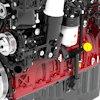
Back in September of 2008 Perkins Engines embraced Tier 4 Interim and Final legislative requirements with the launch of its 1200 Series range of cleaner, compact diesel engines.
The 1200 Series extends Perkins' Interim Tier 4 product offering up to 243 kW. The first engines to be introduced in 2010 will be a 7 liter offering, followed in 2011 by 6.6 liter and 4.4 liter products.
"Building on our Voice of the Customer approach for Tier 3, we are continuing to develop collaborative design programs with customers to make sure this new range provides the optimum engine solution to meet Interim and Tier 4 Final requirements. Extensive technology expertise, collaborative design processes and system integration experience alongside an unequalled global product support network will give Perkins the power to exceed customer expectations," says Hans Haefeli president, Perkins Engines Company Ltd.
"As the industry takes a huge step forward towards a ‘low or no' emissions era the engine manufacturer must become the solutions provider," adds Hans. "Reducing particulate matter (PM) by 90% and NOx by up to 50% beyond current EPA Tier 3/EU IIIA standards is a challenge. To achieve this, the most significant changes will include the additional use of after treatment systems. It is widely expected that these will be a combination of diesel oxidation catalysts and diesel particulate filters.
"We will be leveraging our expertise to ensure that at Tier 4 we have created a compact product range that will deliver increased power density, improved flexibility, better fuel efficiency and, through our collaborative work, offer our customers class leading package installation solutions," continues Hans.
Meeting Tier 4 needs does not stop at the tailpipe. "The regulations will also extend into the field with requirements such as in-field testing and on-board diagnostics. The more complex the product becomes, the more important it is for you to have a sophisticated and technically competent aftermarket support network, which is why at Perkins we continue to work with our dealers to develop the strongest aftermarket distributor network in the world," he says.
The 1206E-E70TTA has two turbochargers – one small, one large, mounted in series. The smaller first stage turbo accelerates quickly, giving excellent response and torque at low speeds, while the larger second stage provides the high airflow required to provide class-leading power density.
Below 130 kW, a shorter stroke version – the 1206E-66TA provides a 6.6 liter engine for customers who need plenty of torque at low engine speed.
The 1204E-E44TA and TTA replace the 1104 engines. The TA, which uses a single turbocharger with intercooler, and the TTA, which uses a two-stage turbocharger, just like the 7 liter engine, for extra power density and quicker response.
As part of the range development, Perkins has introduced a number of new features to reduce service requirements. Hydraulic tappet adjustment has been added which avoids the need to check and adjust valve clearance at 1000 hour intervals, thus saving time and expense for the machine owner. It will also allow machine designers to make better use of the space directly above the engine for mounting other equipment, such as aftertreatment.
Though the aftertreatment is typically positioned above the engine, it can in fact be mounted pretty much anywhere on the machine. Aftertreatment will be offered both as an independent canister (non-modular) but also as a tightly packaged module, thus saving engineering and validation effort for OEM customers.
While the diesel particulate filter will remove nearly all of the particulates from the exhaust stream, it is still desirable to have very low particulates out of the engine. To achieve this, Perkins is using electronically controlled high pressure common rail fuel systems.
The 1204 model replaces the popular current 1104 engine. It is offered in a choice of three versions; the straight turbocharged version is a cost effective option for lower power requirements as it will not require the cost and packaging challenge of an air-to-air charge cooler; the second TA version uses a single turbocharger but will be intercooled, providing a slightly better fuel economy than the straight T while offering greater power and torque; the TTA version uses a two stage turbocharger, like the 7 liter engine, for extra power density and faster response.
All of these engines will employ Perkins NOx reduction technology, rather than SCR technology so there will be no requirement for the customer to buy, store and fill up with urea.
The 1204 will be available at a range of rated speeds and torque curves, to ensure that is suitable for interface with a wide variety of different transmission types.
Advances have also been made with the 800 Series engines. Power and torque is being increased, by up to 40%, allowing an engine choice for customers who might currently take the lower range of the 1104D engine. With its more compact package it will allow OEMs to make some room for the aftertreatment packaging and will provide better fuel economy in some operating conditions.