The financial turmoil that has gripped the globe may soon be impacting efforts to reduce emissions. Even as engine and equipment manufacturers grapple with the research and development costs they're incurring to meet the ever-tightening restrictions on exhaust, they're discovering that their customers are either unwilling or unable to purchase their products.
The result? Engine and equipment manufacturers are getting squeezed at both ends. While not a unique problem in today's economic climate, it is more severe in the off-highway industry, given the relatively small size of most manufacturers and the wide-ranging assortment of products they produce.
Fortunately for the off-highway industry, Tier 4, the next significant round of emission reductions for off-highway equipment, won't start taking effect for two years. Nonetheless, the off-highway industry is keeping a close eye on the sales of heavy-duty trucks, which will have to meet stricter standards with the 2010 model year.
The Engine Manufacturers Assoc. pledges that, despite the financial turmoil, 2010 trucks will roll off the production lines as scheduled. "All engine and vehicle manufacturers will have product available to meet the applicable emission standards when the 2010 models are introduced," says Jed Mandel, the association's president.
A market with no buyer?
But the real question is whether fleet owners will buy them, as they are expected to cost $7,000 to $10,000 more than their 2009 counterparts, according to a research report prepared by NERA Economic Consulting.
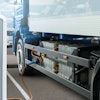
Most 2010 models will rely on a new technology — Selective Catalytic Reduction (SCR) — to meet their emission targets. The technology reduces emissions by using injected urea and a catalyst to convert NOx emissions into nitrogen and water. The new technology requires an additional storage tank, more electronic controls and a sufficient supply of urea. The new components, plus the additional service requirements may scare off the buyers who would prefer to conserve their capital until they see how both the technology and the economy perform.
The NERA study indicates that engines, equipment and truck manufacturers have good reason to be concerned. Its analysis of purchasing patterns from the last round of on-highway emission regulations indicates sales of heavy-duty (Class 8) trucks drop significantly when the new emission standards were introduced. That loss, however, was offset in the two years prior to the rollout as fleet owners "prebought" trucks to avoid the more expensive models, according to the study. The current credit crisis may prevent similar prebuying for the 2010 models.
"Fleet owners and operators are experiencing very tough times due to the current economic conditions, as are engine and vehicle manufacturers," Mandel says. "EMA continues to support efforts to provide financial incentives to customers and early adopters of the 2010 technology as a way to assist fleet owners and to ensure that the anticipated emission reductions benefits from the new technology are realized."
Even as they keep one eye on the truck market, off-highway manufacturers are intently focused on their balance sheets as they try to meet payroll while developing the next generation of low-emission vehicles.
Sales of construction equipment drops
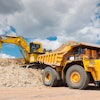
Manufacturers of construction equipment appear to be the hardest hit. As of the end of September, they were projected to experience a 9% drop in sales in 2008 followed by a year of insignificant growth (0.4% growth) in 2009, according to the annual outlook survey prepared by the Assoc. of Equipment Manufacturers (AEM). Earthmoving equipment appears to be especially hard hit, with 2008 sales expected to be off 16%.
As gloomy as that data seems, it may prove to be too optimistic. That's because it does not take into account the credit squeeze that brought sales to a halt in the fourth quarter. In order to generate revenue, equipment manufacturers will be lobbying strenuously for a federal stimulus package that includes major investments in new roads and bridges.
"Government measures to boost infrastructure investment will play a critical role in our industry's recovery as well as strengthening the U.S. economy overall," says AEM President Dennis Slater. "We need to get dollars into the construction pipeline. Committing funds to infrastructure renewal not only provides manufacturing and construction jobs, but also helps to ensure we have safe and efficient movement of goods and services."
Farm equipment manufacturers are expected to fare slightly better than their colleagues in construction industry, given the demand from Europe and emerging countries. However, these projections may also be too optimistic because the financial crisis has gone global.
Concerns about alternative fuels
Manufacturers and fleet owners aren't the only ones concerned about potential impacts. Financial realties may delay implementation of state mandates, including California's proposal to require retrofits on all in-use heavy-duty trucks by 2014 and to replace all pre-2010 trucks by 2022. Loss of tax revenue may also cut government funding. California's retrofit program, for example, was to be accomplished in part through a $1 billion funding program. In New York, a $190 million program to retrofit 30,000 state trucks may also be in jeopardy as legislators grapple with growing deficits.
Many alternative fuel producers are also in financial trouble. Investors and lenders are pulling back, much like what happened in the boom-bust cycle that wiped out alternative fuel initiatives 30 years ago. Alternative fuels were very attractive when oil costs $150 a barrel or more, but now that it has dropped to a third of that price, government subsidies and regulations can't offset the higher cost of these fuels.
In short, the current economic turmoil may necessitate some rethinking about the financial achievability of emission-reduction goals. While President-elect Barack Obama has been a strong proponent of both alternative fuels and emission reductions, federal and state regulators may soon discover that they can't meet their air-quality targets if no one is buying the new equipment, squeezing manufacturers out of business. Policy makers may be faced with some tough questions. Will there be financial incentives for companies to purchase the new technology? If so, will fleet owners wait to see what will be the best deal they can get? And how will all that impact manufacturers who have already invested in product they now need to sell?
Dave Jensen is a contributing editor from Milwaukee, WI.