The Environmental Protection Agency (EPA) is about to implement sweeping new regulations for spark-ignition engines less than 25 hp that will introduce new types of standards it has never regulated before. The new standards, some of which will take affect this coming January, will affect more than 1,000 different types of equipment, according to the EPA's estimates.
In addition to significantly reducing NOx, hydrocarbon and carbon monoxide emissions from these sources, the regulations will restrict the amount of fuel that can evaporate from fuel lines, gas caps and fuel tanks starting in 2008. The regulations also include the first federal standards for boats powered by stern drive or inboard engines and the first federal standards for carbon monoxide emissions from recreational watercraft, both of which will be phased in starting in 2009.
The regulations affecting emissions from lawn and garden equipment will reduce HC and NOx emissions by 35% once they start taking effect with the 2011 model year. That's over and above the 60% reduction achieved through the last round of emission regulations on lawn and garden equipment, which completed their phase-in last year. Initially, the new round was slated to cover both handheld and non-handheld equipment, but the EPA shelved plans for stricter emission standards for the handheld equipment, concluding that existing standards represent the "greatest degree of emission reduction achievable for these engines."
While the regulations are sweeping, engine and equipment manufacturers believe they are achievable.
"Meeting the substantial emissions reductions called for in the EPA proposal will be a challenging goal," says Jed Mandel, president of the Engine Manufacturers Assn. (EMA). "Our assessment is that the EPA has proposed an aggressive, but implementable, program to make further emission reductions a reality for the small spark-ignition engine and equipment industries."
Sitting down with regulators and environmentalists
A primary reason for industry acceptance is the approach EPA used to write the rules. The agency sat down with engine and equipment manufacturers, as well as environmentalists, to negotiate a regulation that would be satisfactory to everyone.
"We have been working on this for quite some time, and we are cautiously optimistic that we can meet the significant technological challenges and infrastructrural developments associated with the EPA program," says Bill Harley, president and CEO of the Outdoor Power Equipment Institute (OPEI), the trade group that represents many of the equipment manufacturers impacted by the regulation.
No one questioned the inevitability of regulations. On an hour-by-hour basis, a push mower emits as much NOx and carbon monoxide pollution as 11 cars, a riding mower's emissions equal 34 cars, and the exhaust generated by recreational watercraft contains as much pollution as 348 cars, according to EPA estimates.
Industry representatives were eager to work with the EPA because they knew that blanket regulations could smother small manufacturers who lack the staff, money or other resources necessary to bring all of their products into compliance at once. The resulting compromise is a set of strict standards softened by extended lead times and an average banking and trading mechanism that allows manufacturers to focus on bringing their high-volume, profit-generating products into compliance first before addressing their niche products, which have limited sales.
"One of our biggest concerns with the regulations was they contain flexibility and sufficient lead times and they do," says Harley.
Catalytic converter technology
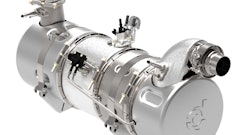
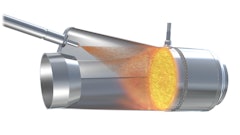
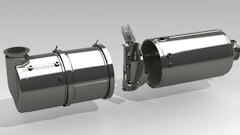
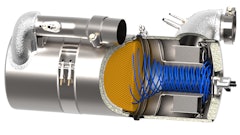
Catalytic converters are expected to be one the chief strategies equipment manufacturers employ to meet the new standards, an approach that could increase the price of walk-behind mowers by 18% and the price of commercial turf-care mowers by 3%, according to the California Air Resources Board (CARB), which will implement similar standards this January.
In addition to cost, catalytic converters also raise safety issues because of the heat they generate, especially when the fuel mix is too rich. This is a special concern for lawn and garden equipment because the inherent space limitations increase the risk of fire. A 2006 EPA study concluded fire and safety concerns were minimal, but equipment manufacturers are still concerned. However, they are more comfortable with the technology than they were five years ago.
"We know a lot more about how catalysts work and the impact on catalysts of certain operating conditions that could result in higher temperatures," says James McNew, OPEI's vice president of technical and marketing services. "We know there are going to be certain instances where there is an increase in heat and we can work on ways to prevent that from being a problem."
Evaporative standards
The new regulations are also designed to achieve a 45% reduction in evaporation-related emissions. The reduction, which will be applicable to both handheld and non-handheld equipment, is expected to be achieved through new layered plastic tanks and the use of "low-permeation" fuel lines that contain a thin plastic layer sealed between two rubber layers. "Running loss" emissions — the evaporative emissions that occur during normal operation — are expected to be reduced by sealing the fuel cap and routing vapors from the fuel tank to the engine intake. Valves or other devices may be necessary to prevent excess fuel from reaching the engine, especially if the equipment flips over.
Even though engine and equipment manufacturers are supportive of the regulations, they do have concerns about the certification process and the difficulty of coordinating the certification of both engines and equipment.
"This is the first time there is a dual-certification process," McNew says. "The engines have to be certified and the evaporative technology has to be certified."
There are also some concerns about harmonization. Although the proposed EPA regulations mirror standards already passed by the CARB, engine and equipment manufacturers must certify to both California and the federal government, which they say will be costly and redundant.
"We would like to see if engines are certified in California they can be certified in all 49 states," says McNew.
Harmonization with Euro standards
OPEI is also trying to see a similar harmonization with Europe, where work has just begun on the next round of emission standards for spark-ignition engines. While Europe may agree to the same emission standards, they are unlikely to give engine and equipment manufacturers the same flexibility they enjoy here.
"They do not have averaging, trading and banking," McNew says. "They've allowed temporary exemptions on certain low-volume products and some of those exemptions are set to expire next year. If they do, some niche products might disappear from the market."
OPEI wants Europe to extend those exemptions and rethink its position on averaging, banking and trading. If that won't work, they would like to find something that offers some long-term flexibility for manufacturers. "We want to sit down with them and see what would work," McNew says.
Dave Jensen is a contributing editor from Milwaukee, WI.