As the possibilities for hybrid drives, electric drives and alternative fuels rise in popularity, maintaining output while increasing efficiency is critical. The push to reduce carbon emissions and overall footprint is moving more businesses to change to these greener technologies.
But these changes are not happening overnight. Due to local legislation (such as noise limitations and mandated carbon reductions), machinery demands, infrastructure limitations, and the cost of change, many manufacturers are implementing small changes over time. One incremental change that can be easily implemented is the integration of electromagnetic braking systems.
Overcoming Infrastructure Hurdles and Embracing New Technologies
Currently, operators are intimately familiar with traditional drives; how they work, how to service them, how to fuel them, and how to procure parts to get them back on the job. Making the shift to a hybrid or electric fleet requires a sufficient level of infrastructure to be built so that these machines can be maintained. To make the shift more palatable, gradual changes are critical to ensuring the success of implementing these new technologies and allowing your workforce to adapt to how they function. As with any new technology, there is a learning curve to understanding how hybrid, electric, or alternative fuels work best, which underscores the importance of early adoption and incremental steps rather than wholesale changes.
The construction industry has relied on hydraulic brakes for decades due to their robust performance in high-torque applications. Now, the widespread adoption of fully electric systems is reducing the dependence on hydraulics, while equipment designers face tighter space constraints and increasing pressure to optimize every component. Advancements in braking technology have moved away from hydraulic or pneumatic systems to electromagnetic brakes in construction equipment applications more frequently.
With their optimal balance of performance and size, electromagnetic brakes can be customized to fit a broad spectrum of drivetrain applications and configurations while maintaining a footprint that works within a manufacturer's spatial requirements. Electromagnetic brakes operate electrically but transmit torque mechanically. These brakes are engaged by springs and released by a magnet that is excited by an electric current. In high-performance construction equipment, electromagnetic brakes are ideal since they do not require any oil or a hydraulic power system (HPU) to operate.
Choosing electromagnetic brakes over other braking solutions has many benefits. Compared to typical hydraulic brakes, electromagnetic brakes generate significantly less noise during idling. Since these brakes do not use oil, they are cleaner and have no risk of oil contamination. The lack of oil also makes them safer than traditional brakes, as there is no risk of oil pressure loss. These brakes are also compact and save space because they can be mounted on the inside of an electric drive.
 Regal Rexord
Real-World Application: Embracing Innovation with Electric Drive Integrated (EDI) Brakes
In the evolving landscape of construction, a new era that trades the roar of combustion engines for the quiet power of motors is dawning. A leading manufacturer of compact construction equipment has taken this transformative step by seeking to electrify its compact track loaders. This transformation proved challenging as standard electric drivetrain solutions were too bulky, and traditional braking systems fell short, leaving this OEM requiring not only a
brake, but a breakthrough.
The switch to electric motors provided a unique opportunity for the team at Warner Electric to re-think what was possible in construction machinery. It also raised a question fundamental to sustainability: Could the OEM amplify the power and performance of its machines while maintaining the limitations of a compact, electrified drivetrain?
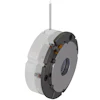
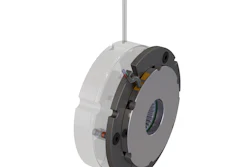
In collaboration with a renowned electric drive manufacturer, Warner Electric engineers took up the challenge, designing the Electric Drive Integrated (EDI) brake. As a result of both thoughtful design and deep technical expertise, the EDI brake is crafted to fit within the OEM’s existing drivetrain, while delivering up to 200Nm of torque in a compact envelope. This advancement not only met the OEM’s demands, but also exceeded expectations, laying a foundation for further transitions to energy efficient systems.
Engineered with a dual-voltage coil controlled by Pulse Width Modulation (PWM), the EDI brake optimizes energy use, extending battery life and reducing power draw. This design reflects a mindful approach to resource management, balancing formidable torque with reduced power consumption. Additionally, Warner Electric has a vast selection of proprietary nonstick friction materials that ensure durability and reliability tailored for e-mobility applications in construction.
The successful integration of the EDI brake not only facilitated the OEM’s transition to electric motors but helped create a new standard for electric construction equipment – the first zero emissions track loader. The way this solution utilizes advanced design and technology to solve spatial and performance challenges has demonstrated the strength in Regal Rexnord’s
engineering prowess and focus on helping customers achieve their goals. The EDI brake is more than a technical achievement — it’s a testament to what can happen when the spirit of progress takes hold, and a real-world problem is met with a solution-oriented approach.
Designed for versatility, the EDI brake’s applications span various construction, agriculture, and earth-moving machinery. Beyond this successful integration, the EDI brake exemplifies the next-generation standard in electric braking, signaling a path forward for the mobile power equipment industry as it embraces the shift towards clean and efficient energy technologies. From compact track loaders and forklifts, to agricultural AGVs, each integration signals a step forward in the industry’s journey toward a cleaner, quieter, and more sustainable future.
Ensuring Success Through Drivetrain Shifts
While it is clear that the shift toward electric or hybrid drives is building momentum, the journey of figuring out which solutions are right for you and how to properly implement them can be challenging. Keeping up with this evolving market and ensuring compliance with ongoing regulatory policies requires a combination of education and partnership with a trusted supplier who can provide ongoing support and recommendations.