We are in an age where autonomous systems will only become more useful in manufacturing and industrial workspaces. As technology advances, many businesses are still holding onto legacy processes that may feel safe and familiar but ultimately constrain productivity and operational effectiveness. Machines are steadily assuming tasks once performed only by humans, while software continues to grow more capable of coordinating complex operations across fleets and facilities.
Autonomy works best when it addresses the hardest problems in operations: environments where labor is scarce, conditions are hazardous, or geography makes traditional workforce models challenging.
For organizations operating large off-road fleets, autonomy offers a practical pathway to safer, more consistent, more enjoyable, and more productive operations. Therefore, administrators must recognize where return on investment (ROI) lies in the immediate years to come.
Autonomy as a Growing Industrial Standard
Across heavy industries, automation has steadily moved from controlled factory floors into dynamic outdoor environments. Today’s off-road equipment manufacturers and operators are exploring how autonomous systems can best improve uptime, reduce operational risk, and increase overall throughput.
What makes modern autonomy different from earlier forms of automation is the ability to orchestrate complex fleets of vehicles rather than individual machines. A single autonomous vehicle provides value, but the real gains come when dozens or hundreds of machines are precisely and safely coordinated within a shared space.
This orchestration allows operations to move from reactive decision-making to system-level optimization. In environments where machines operate for long shifts and labor availability is limited, the financial case for autonomy becomes especially clear. When fleets are large and operational continuity matters, even small improvements in productivity can translate into significant gains across the entire operation.
But the benefits extend beyond productivity. Autonomy also helps address one of the most persistent challenges in heavy industry: safety.
Rather than relying solely on human vigilance, autonomous systems integrate sensors, perception technology, and intelligent controls that constantly monitor surroundings and enforce operational rules. This system-level approach creates multiple layers of protection that reduce the likelihood of incidents in complex and hazardous environments.
Applications in Off-Road and Remote Locations
Some of the strongest use cases for autonomy exist in locations where traditional workforce models are difficult to sustain. Remote mines, large industrial yards, and expansive agricultural operations often face persistent challenges in recruiting and retaining skilled equipment operators. Even when labor is available, the logistics of transportation, shift scheduling, and environmental factors can limit employee satisfaction and productivity.
Autonomous vehicles help overcome these barriers by allowing equipment to operate continually on-site regardless of distance from population centers. In distribution and logistics yards, for example, autonomy enables precise movement of trailers and materials within tightly coordinated environments. Instead of relying on manual repositioning and driver skill, autonomous yard vehicles can handle repetitive transport tasks with accuracy and consistency.
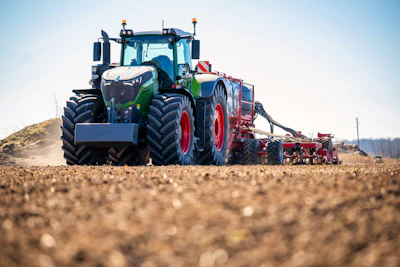
Agricultural operations also benefit from autonomy, especially on large-scale farms where equipment must cover thousands of acres efficiently. Autonomous tractors and support vehicles can maintain precise paths while reducing operator fatigue during long seasonal work cycles.
In both cases, the value of autonomy comes from its ability to overcome real operational constraints, not simply replace human labor. The goal is to increase reliability and scalability while allowing people to focus on higher-value tasks at a higher level of satisfaction.
Seamless Orchestration Anywhere in the World
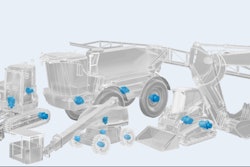
With an OEM-agnostic fleet management platform, users can orchestrate multiple vehicle types operating simultaneously. Whether the machines are haul trucks, loaders, tractors, or yard vehicles, the system enables them to work together safely within a shared environment.
This orchestration allows teams to manage entire fleets at one time rather than focusing on individual machines. Vehicles follow optimized routes, maintain safe distances, and adjust dynamically to changing conditions. Because the system operates digitally, it also creates opportunities for centralized monitoring and oversight. Operations managers can supervise activity across entire sites and adjust in real time whenever needed.
The result is a more predictable and resilient operation. Consistency matters in industrial environments. When machines behave predictably, scheduling becomes more reliable, maintenance planning becomes easier, and overall productivity improves. Autonomy delivers that consistency at scale.
Autonomation Enhancing the Human Experience
One of the most common misconceptions about autonomy is that its function is to replace people. In reality, the most successful deployments enhance human capability rather than eliminate it. In many industrial settings, equipment operators spend long hours performing repetitive tasks in physically demanding or hazardous conditions. Autonomy allows machines to handle those repetitive functions while enabling people to move into maintenance, supervisory, and strategic roles.
This shift creates opportunities for safer working environments and more engaging career paths. But achieving these outcomes requires more than just technology. Successful autonomy deployments depend heavily on culture and change management. Trust must be built within the workforce. Teams need to understand how the technology works, the larger intention behind the integration, and how their roles will evolve as automation expands.
Moving From Curiosity to Implementation
Autonomy is no longer a future concept; it is a practical tool for solving real-world operational challenges today. Industrial leaders who succeed with autonomy deployments tend to focus on three core principles:
- Deploy autonomy where utilization is high and operational constraints are significant
- Design safety at the system level rather than with individual machines
- Invest in your people and organizational readiness. Technology alone does not transform an operation; teams do.
For organizations managing large fleets of off-road vehicles, autonomy represents a pathway to greater efficiency and operational resiliency. The technology is ready. The opportunity now lies in thoughtful implementation. And for industries operating in the most demanding environments on Earth, autonomy may be the key to unlocking the next level of operational performance.