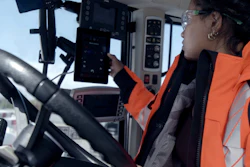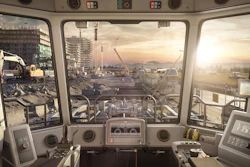
Walk up to almost any piece of industrial equipment, fire apparatus, marine vessel, or off-highway machine, and you’ll still find one thing that has changed surprisingly little over the decades: the operator interface. Buttons, rockers, toggles, simple electromechanical devices that have long served as the physical bridge between operator and machine.
For years, that was enough. But machines have changed. They are more intelligent, more connected, and far more software-driven than they were even a decade ago. Engines generate real-time fault data, hydraulic systems are electronically controlled, and safety systems increasingly depend on layered logic and interlocks. At the same time, operators expect better visibility into machine status and more intuitive controls, shaped by the user experience they encounter every day in automobiles and consumer electronics.
That evolution has changed the role of the switch. What was once simply an electrical connection is now increasingly part of a larger digital control architecture.
For OEMs evaluating operator-interface strategy, the question is no longer whether CAN-based digital switching belongs in machine design. Increasingly, it does. The real question is which interface architecture delivers the right balance of usability, flexibility, functionality, and control for the application.
That choice matters more than many equipment designers realize. The right interface can simplify wiring, reduce assembly costs, improve diagnostics, enhance safety, and create a better operator experience. The wrong one can lock a machine into unnecessary complexity, increased service burdens, and limited future flexibility.
The good news is that OEMs now have more choices than ever. The challenge is understanding where each one fits.
Why CAN-Based Controls Have Changed the Game
To understand why CAN-based controls have become so important, start with wiring.
Traditional electromechanical switches are point-to-point devices. Every switch needs dedicated wiring, and every function requires its own circuit. That works well in simple machines, but as machine functionality grows, wiring complexity grows with it. A moderately complex machine can easily require dozens, or even hundreds, of conductors in its control harness.
That creates real problems: more copper, more labor, more routing complexity, and more failure points. In larger machines, long wiring runs also add weight and make troubleshooting more difficult.
CAN changes that by shifting the architecture from point-to-point wiring to networked communication. Instead of functioning as isolated devices, switches, keypads, and displays become intelligent nodes on a shared communication bus. In many cases, an entire control bank can be connected with just four wires: power, ground, CAN High, and CAN Low.
The wiring reduction alone is compelling, but it is not the only advantage. CAN-based systems also introduce software-defined functionality. A single physical button can perform different actions depending on machine mode or operating conditions. LEDs can communicate system status, fault conditions, or warnings. Functions can be updated without physical rewiring.
Beyond functionality, CAN-based controls also help modernize the machine itself. Illuminated keypads, dynamic LED feedback, and graphical displays create a more contemporary operator experience. For OEMs competing in premium equipment markets, that visual modernization can reinforce the perception of technical advancement and product quality.
That flexibility is one reason some companies continue to see growth as OEMs increasingly adopt CAN-based control architectures. Still, CAN is not automatically the right choice in every application. Traditional switching remains practical in many environments. The question is where CAN creates the most value.
Traditional Electromechanical Switching: Still Relevant
It is easy to assume traditional switching is becoming obsolete. It isn’t.
Electromechanical switches remain highly effective because they solve simple control problems simply. They are inexpensive, mechanically intuitive, and universally understood by operators and technicians. When a rocker or toggle is pressed, the operator knows exactly what it does, and a technician can troubleshoot it directly.
That simplicity is their greatest strength. In low-function machines or applications where controls rarely change, traditional switches remain efficient and practical. There is no software to configure, no network communication to manage, and no learning curve.
Their limitations appear as machine complexity increases. Each additional function requires more wiring, more panel space, and often more relay logic. Traditional switches are also limited in intelligence. They can activate functions, but they cannot participate in diagnostics, conditional logic, or advanced operator feedback.
For many OEMs, this comparison alone makes the move toward CAN compelling. But CAN-based interfaces are not a single category. There are multiple approaches, each designed for different operational priorities.
CAN Rockers: Familiar Feel, Modern Architecture
For OEMs taking their first step into CAN, rocker switches are often the most natural starting point.
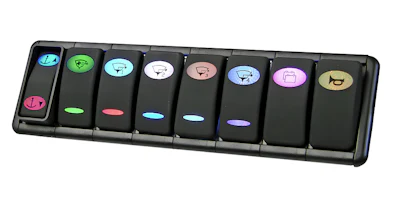
CAN rockers preserve the familiar tactile experience of traditional switches while bringing the wiring and software benefits of digital architecture. To the operator, they feel familiar. To the machine, they behave like intelligent networked devices.
That makes them especially attractive in industries where muscle memory matters. In emergency vehicles, construction equipment, and utility fleets, operators often need to activate controls quickly without taking their eyes off the task.
CAN rockers also modernize the interface visually, often adding illuminated indicators and programmable feedback. For OEMs, they create a bridge between traditional ergonomics and a more advanced product presentation.
Companies can offer CAN rocker product lines specifically for this transition point.
Fixed CAN Keypads: Compact and Efficient
The next step in CAN evolution is the fixed keypad.
Fixed CAN keypads consolidate multiple functions into a single compact control surface. The physical legends are fixed, but the behavior behind each button remains programmable. That creates much greater function density while retaining tactile interaction.
This category is especially valuable for OEMs with stable product platforms. If a machine’s control layout remains consistent across production, a fixed keypad offers an efficient, space-saving solution.
More functions fit into less panel space, and operator feedback becomes more sophisticated through multi-color LEDs and programmable visual effects. Just as importantly, fixed CAN keypads often create a cleaner, more contemporary control panel appearance.
The limitation is adaptability. If the control scheme changes frequently, the fixed physical legends become restrictive.
Modular CAN Keypads: Designed for Change
For OEMs dealing with configurable equipment, modular CAN keypads offer a different advantage: adaptability.
Unlike fixed keypads, modular systems use interchangeable inserts or configurable button modules, allowing the physical interface to evolve without replacing the entire unit. Some platforms offer OEMs the ability to quickly change layouts, functions, or branding requirements.
For OEMs building equipment on a contract basis or supporting multiple machine variants, modularity reduces redesign friction. Functions can be relabeled, layouts can be adjusted, and prototypes can be modified quickly.
That can accelerate development cycles and simplify product-family management. The tradeoff is complexity. If the control layout never changes, the added flexibility may not justify the extra cost.
GUI Displays: Maximum Information, Maximum Flexibility
At the top end of the operator-interface spectrum is the graphical user interface.
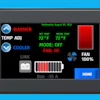
Touchscreen HMIs offer the highest degree of flexibility because the interface itself is software-defined. Layouts can change, functions can evolve, and information can be presented dynamically depending on machine conditions.
A single screen can combine diagnostics, machine status, workflow guidance, sensor data, and control functions in one integrated interface. For advanced machines, that level of information density is a major advantage.
GUI systems also deliver the strongest visual modernization. A graphical display immediately signals a more advanced machine platform and aligns with growing customer expectations for digital capability.
But GUI systems introduce an important tradeoff: they sacrifice tactile certainty. In emergency vehicles, utility fleets, and mobile equipment, operators may be driving at speed, communicating by radio, or responding to urgent situations where their eyes need to stay on the environment ahead. In those moments, physical buttons provide something touchscreens cannot: muscle memory. An operator can locate and activate a rocker or keypad by feel, or with only a quick glance.
That is why many OEMs are moving toward hybrid architectures rather than touchscreen-only systems.
The most important distinction between these categories is not technological sophistication — it is application fit. Some prioritize tactile certainty. Others prioritize compactness, adaptability, or information visibility.
Hybrid Architectures: Increasingly the Best Answer
Increasingly, the best machine interfaces combine multiple categories.
A touchscreen may handle diagnostics and advanced settings. A keypad may manage operational modes. Rockers may control high-frequency physical functions. Together, they create a layered interface that leverages the strengths of each.
A fire truck is a good example. The cab may retain rocker switches for lights and sirens because operators need instant tactile access. The pump panel may use programmable keypads because function density matters. A graphical display may provide diagnostics and system monitoring.
That is smart architecture, not because it uses the newest technology, but because it uses the right technology in the right place.
Software and Supplier Support Matter
As CAN-based controls become more capable, software becomes just as important as hardware.
In traditional switching, functionality is defined by wiring. In CAN-based systems, functionality is increasingly defined by software, what a button does, how LEDs respond, what conditions trigger interlocks, and how machine status is communicated to the operator.
That opens new possibilities. A single button can perform different functions depending on machine mode. LEDs can change color based on fault severity or operating conditions. Safety interlocks can require timed presses or multi-step confirmation before activation.
This is where advanced software platforms create real value. Some companies combine hardware with software configurability, including embedded scripting that allows OEMs to build custom logic directly into the keypad. That gives engineers greater control over machine behavior, safety, and diagnostics without adding hardware complexity.
Just as important is supplier responsiveness. As machine interfaces become more application-specific, OEMs increasingly need partners who can support customization, fast prototyping, and engineering collaboration. That ability to move quickly from concept to production can be as valuable as the hardware itself.
In the end, the best operator interface is not the most advanced one. It is the one best matched to the machine, the operator, and the operating environment, while giving the OEM enough flexibility to evolve with future demands.