OEM Off-Highway spoke with Julien Le Vély, director of global marketing and sales at John Deere Power Systems (JDPS), to discuss the the latest shifts in off-highway equipment powertrain design. Below, he provides insights on how the company is developing a range of power solutions — including advanced diesel, hybrid and battery-electric — to meet the diverse performance, sustainability and operational demands of modern construction jobsites. Julien Le Vély, director of global marketing and sales, John Deere Power Systems (JDPS)John Deere Power Systems
What challenges most affected the off-highway mobile equipment landscape and product development in 2025?
In 2025, the primary challenge for the off-highway industry was managing the diversity of power requirements and evolving regulatory scenarios across different applications. The industry has moved beyond a single-solution mindset, and OEMs face the complex task of determining the most viable power source for each application. This may mean optimizing combustion engines for heavy-duty cycles or integrating hybrid and battery-electric technologies where they make the most sense.
With so many paths, it becomes essential to carefully evaluate the specific needs of the equipment and end user. Manufacturers must weigh immediate performance needs against evolving infrastructure and regulations. For instance, finding battery solutions capable of withstanding the demands of off-highway environments remains a hurdle. This is where our majority ownership of KREISEL Electric (KREISEL) becomes vital, allowing us to offer high-performance battery technology specifically designed for these demanding conditions.
For John Deere Power Systems, addressing this challenge means empowering customer choice through a versatile portfolio. We are advancing next-generation diesel engines, enabling the use of renewable fuels, and integrating cutting-edge battery technology where it delivers the most value. Most importantly, we ensure that every solution is rigorously tested and backed by comprehensive aftermarket and customer service support, giving OEMs the certainty they need to invest in the future.
How would you characterize the current state of the off-highway mobile equipment design industry, and what major shifts have you observed over the past year?
OEMs and suppliers seem to pursue dual-track strategies: investing in near-term compliance technologies while developing scalable platforms for alternative fuels and electrification. I would characterize the current state of the industry as one of strategic execution. We have moved beyond the initial exploration of emerging technologies into a phase of practical integration. The industry is settling into a diversified power landscape, defined by the recognition that different applications require distinct, optimized power solutions.
The most significant shift we observe is the industry’s embrace of a "multiple pathway" approach to equipment design. Over the past year, the narrative has evolved from a broad, uniform push for new technology to a more nuanced strategy. We are seeing renewed energy around the internal combustion engine, driving our investment in optimizing diesel technology for greater efficiency and readiness for future emissions regulations. Simultaneously, we are ensuring compatibility with renewable fuels and leveraging our battery integration expertise for hybrid and electric applications, allowing customers to meet sustainability goals without sacrificing the performance they demand.
This shift drives our commitment to providing a versatile range of solutions. Whether an OEM is designing a high-horsepower machine requiring a next-generation diesel engine or a compact unit suited for our KREISEL battery technology, the goal remains the same: delivering a validated, reliable solution that meets the specific needs of the end user. Full battery-electric and hybrid solutions are being accelerated for segments where operational profiles and infrastructure allow them.
What emerging customer needs or regulatory pressures are having the strongest influence on your product development roadmap for 2026 and beyond?
The voice of our customers is the strongest influence on our product roadmap. As they navigate the complex balance between regulatory compliance and machine productivity and operating margins, our role is to provide options, not barriers, to make sure these external pressures do not limit their potential.
By prioritizing customer choice, we are shaping a roadmap that offers a versatile range of validated solutions. This approach allows our customers to navigate these challenges with the specific power technology that best fits their business and their bottom line. Regardless of the product selected, we see a clear signal from the market: Sustainability cannot come at the expense of performance or uptime. With this understanding, we are prioritizing solutions that allow OEMs to meet regulatory targets without sacrificing the performance their customers rely on.
We are preparing for future emission standards not just by updating aftertreatment systems, but by fundamentally optimizing our next-generation diesel engines to be more efficient and compatible with renewable fuels. We view the use of renewable fuels — specifically biodiesel, renewable diesel (HVO), and ethanol — as an essential factor in our engine strategy. For instance, all John Deere Final Tier 4/Stage IV and Interim Tier 4/Stage IIIB engines are now approved for use with B30 biodiesel blends, an increase from the previous B20 limit. Additionally, our Tier 3/Stage IIIA and lower-tier engines without exhaust filters can use up to 100% (B100) biodiesel. For heavy-duty applications, the internal combustion engine remains the primary workhorse, and our focus is on ensuring that it remains a viable long-term solution.
For segments prioritizing lower operating costs and reduced noise, we are developing targeted hybrid and battery-electric solutions. Leveraging KREISEL battery technology allows us to tailor high-performance products to meet these exact needs. Our goal is to right-size the power source to the application, so that whether a customer chooses diesel or electric, they receive a validated solution backed by the comprehensive support needed to keep their operations running.
How are advancements in electrification, hybrid powertrains, or alternative fuels shaping the engineering priorities for next-generation mobile equipment?
These advancements are fundamentally shifting engineering priorities from component selection to holistic system integration. In this new era, the power source can no longer be engineered in isolation; it must be optimized as part of the total machine ecosystem to ensure efficiency and performance.
On the internal combustion engine side, we are especially focused on power density and hybrid readiness. As we design next-generation diesel engines, we are working to deliver maximum power in compact packages while supporting compatibility with renewable fuels and the ability to integrate with electric drivetrains. This allows OEMs to maintain machine capability without increasing physical size or weight or requiring an extensive redesign.
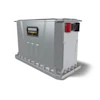
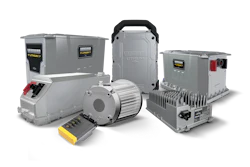
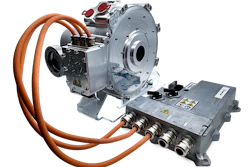
For electrification, the primary design priority is balancing energy density with the rigorous demands of the jobsite. This is why all KREISEL batteries feature Dynamic Performance Management, which utilizes patented cell immersion cooling technology and advanced software systems to optimize performance and safety in extreme temperatures. To support this, KREISEL batteries are built on a flexible, modular architecture that prioritizes energy density and optimizes runtime as well as seamless integration into off-highway machinery. The result is a high-performance solution that allows us to provide all-electric powertrains across diverse equipment segments.
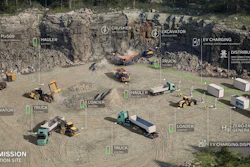
We also recognize that engineering an electric machine is only half the equation; building a robust charging ecosystem is just as critical. To effectively support the transition, John Deere is committed to providing charging solutions that are as versatile as the jobsites they serve. This means developing both stationary and mobile charging options with varying power outputs that can be scaled. With KREISEL, we are pursuing charging solutions specifically designed to serve off-road electric construction vehicles where typical grid infrastructure is insufficient or not available.
Finally, this diversity of power sources ties into a broader shift toward software and controls as a primary design element. Managing the flow of information between engines, batteries, and the drivetrain requires sophisticated control architectures, making software development just as critical as mechanical engineering in our equipment design.
How is connectivity influencing how you design, update and support your product offerings?
Today’s machines are more connected than ever, generating vast amounts of data that we must harness to revolutionize the customer experience. One way we are prioritizing data and connectivity is through John Deere Connected Support, a powerful technology that remotely monitors engine health and diagnostics and is enabled by the Modular Telematics Gateway (MTG).
This connectivity influences our product offerings in three critical ways:
- Maximizing Uptime Through Predictive Support — We design our engines to communicate directly with our global network of more than 9,000 service locations. By analyzing aggregated data from over half a million connected machines, we can generate predictive alerts that help identify potential issues before they cause downtime. This allows dealers to contact customers and resolve problems before they impact the jobsite.
- Streamlining Service and Updates — Connectivity has fundamentally changed how we support products in the field. Through remote diagnostics, technicians can connect to a machine without visiting the site, allowing them to identify the root cause of an issue and often resolve it through remote software updates. When a site visit is necessary, the technician arrives knowing exactly what is wrong and can bring the right parts, which helps reduce service turnaround time.
- Optimizing Total Cost of Operation — We utilize connectivity to give end users visibility into critical operational data. Machine owners can monitor fuel usage, idle time, and engine utilization remotely. This data empowers them to make informed decisions that can help lower daily operating costs and improve efficiency.
For OEMs, integrating this connectivity offers a distinct competitive advantage. It provides enhanced visibility into their customers' machines. This insight helps drive customer satisfaction by optimizing equipment reliability and making it easy to support. Ultimately, we are using connectivity to ensure that John Deere-powered equipment delivers not just reliable power, but maximum uptime.
What changes are you seeing in operator expectations, and how are these influencing cab design, user interfaces and human-machine interaction?
We are seeing a shift where operators are looking for the same level of intuitive interaction, connectivity, and comfort in their equipment as they experience in their daily lives. This drives OEMs to design cabs that are not just workspaces, but integrated command centers.
For JDPS, this influence shapes how we approach system integration. Whether for a next-generation diesel engine or a KREISEL battery application, our priority is providing seamless data integration and advanced controls. This allows OEMs to create user interfaces that are easy to read and operate, which helps to bridge the skills gap for newer operators. Additionally, our focus on reducing noise and vibration across our entire lineup — from electric drivetrains to optimized combustion engines — directly supports the OEM’s goal of creating a more comfortable, productive operator environment.
How have supply chain conditions affected design decisions, component standardization, or material choices for your products?
In 2025, the supply chain conversation shifted from "crisis management" to "strategic resilience." While the acute disruptions of previous years have stabilized, regional variability and longer lead times for specialized components persist. As a result, we are prioritizing modularity and standardization in our designs for greater supply chain stability.
Our focus is on reducing complexity so that our solutions remain viable and supportable, regardless of market fluctuations. Ultimately, these decisions are about providing OEMs with confidence that the power solutions we design today can be reliably supported and maintained for years to come.
How is sustainability influencing your design strategy, from materials selection to life-cycle management, and what targets have you set for 2026 and beyond?
We believe that the most sustainable machine is one that maximizes productivity and delivers optimal performance. This philosophy drives a design strategy focused on providing a versatile range of power solutions that allow OEMs to right-size their approach to decarbonization.
We are prioritizing the optimization of our engines to deliver greater fuel efficiency and broader compatibility with renewable fuels, such as renewable diesel (HVO) and biodiesel blends up to B30. This strategy allows our customers to significantly reduce their carbon footprint immediately, using equipment that fits their current operational needs.
Simultaneously, we are driving the active exploration of electrification and hybridization to meet future demands. By developing high-performance battery solutions and hybrid-ready technologies, we are expanding the options available to OEMs. Our goal is to provide a comprehensive range of power choices that enable customers focused on carbon reduction to lower their footprint while maintaining the performance they require.