@Greg Kelton | stock.adobe.com
As OEMs navigate evolving emissions regulations, labor shortages, electrification and rising demands for uptime, power system selection has become a strategic design decision rather than simply a component choice. OEM Off-Highway spoke with Dylan Rewoldt, director of sales at Vanguard Commercial Power, to learn more about the trends shaping off-highway equipment development, from integrated power solutions and battery technology to connectivity, serviceability and the growing importance of designing machines that maximize productivity and total cost of ownership.
What challenges are affecting off-highway mobile equipment landscape and product development?
The off-highway equipment landscape has been shaped by economic pressure, tariff uncertainty and a tight labor market: shifting the industry's focus toward solutions that ensure profitability and uptime. Manufacturers and end users are seeking equipment that can perform reliably, even with a less experienced workforce. The primary challenge is no longer choosing between gas or electric, but rather finding the right power solution that delivers the lowest total cost of ownership (TCO) and the highest productivity for the job at hand.
The widening skills gap remains a key driver for equipment design. With high turnover rates, the market relied on established technologies that make equipment easier to operate. For internal combustion engines, proven features like Electronic Fuel Injection (EFI) and TransportGuard continue to be essential. Novice operators in particular benefit from these systems, as EFI ensures consistent starting and TransportGuard prevents oil dilution during transport, enabling productivity without the risk of equipment failure. On the electrification side, the industry is gravitating toward equipment that replicates this intuitive operation while also capitalizing on the inherent quietness of electric power to improve jobsite safety and communication.
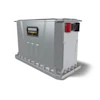
Economic headwinds kept the focus on operational efficiency, with buyers prioritizing uptime and long-term value. For combustion-powered equipment, the industry focused on streamlining maintenance to keep machines on the job longer. Systems that extend service intervals are essential for minimizing disruptions because they allow crews to maximize productivity while significantly reducing overall maintenance costs. Meanwhile, the financial case for battery power is solidifying around its ability to solve specific operational challenges, such as enabling indoor use and quiet operation. To further secure uptime, swappable battery systems like the Vanguard Si1.5 offer a practical solution by allowing users to swap a battery quickly and effectively eliminating charging delays.
Ultimately, the complexity of managing diverse power needs underscores the value of an integrated partner over a transactional vendor. Vanguard bridges this gap by serving as a comprehensive power application expert for both technologies. This includes complete electric systems — featuring a battery, battery management system (BMS), motor and motor controller — as well as application-engineered commercial engines. By offering both technologies, we allow manufacturers to source optimized power directly from a single partner. This approach removes the burden of integration from OEMs. It ensures that whether a machine requires the high torque density of our BIG BLOCK engines or the zero-operating-emissions profile of a commercial battery pack, the power system is always purpose-built for reliability and performance.
What major shifts have you observed in off-highway mobile equipment design over the past year?
The industry is prioritizing deep application expertise. The focus has moved beyond simply selecting a power source to integrating a power system that solves specific operational challenges. We see a design philosophy driven by the unique demands of the application, where the goal is to design a power system that maximizes life cycle value and productivity, rather than just swapping an engine for a battery.
This shift transforms the power provider from a component supplier into a strategic integration partner. Complex electrical systems make the traditional model of sourcing individual components inefficient. OEMs now seek partners who supply the entire power system as a single, integrated unit. Vanguard supports this through our Battery Technology Partner program, which aligns specialized solutions providers with OEMs to offer extended engineering support. These partners combine specialized industry expertise with our technology to help manufacturers design electric systems or repower machines that would otherwise be out of reach.
Finally, commercial engine design continues to evolve alongside electrification. At Vanguard, we are continuously optimizing our engines for efficiency and productivity. Beyond performance, we are integrating technologies that extend maintenance intervals and simplify starting. We are also prioritizing serviceability through standardized parts and intuitive maintenance touchpoints, ensuring that combustion power remains an easy-to-service asset for heavy-duty applications.
What emerging customer needs or regulatory pressures are having the strongest influence on your product development roadmap?
Two main drivers shaping our product roadmap are the need for jobsite access in regulated environments and the operational need for productivity. While environmental mandates dictate where equipment can operate, the financial realities of our customers dictate the long-term adoption of a solution. Consequently, our development strategy prioritizes power solutions that ensure compliance without compromising profitability and productivity.
Regulatory influence has shifted from general sustainability goals to immediate market access constraints. Increasing municipal requirements for low-emission and low-noise zones are limiting where standard equipment can operate. Contractors in construction and commercial turf need machinery that qualifies for indoor projects, noise-sensitive urban areas and restricted operating hours. This drives our development of a scalable commercial battery lineup, enabling OEMs to deploy zero-operating emission equipment that meets these strict standards while delivering the power density required for these applications.
Operational efficiency is the second major influence. Equipment owners are scrutinizing total TCO more closely than ever, focusing on reducing downtime and service costs while maximizing the equipment's usable life cycle. We are responding by optimizing runtime and maintenance across our lineup. For electrification, our swappable battery systems help to eliminate charging delays and keep crews moving. For internal combustion, we continue to refine our engine portfolio and leverage technologies like Oil Guard, which extends maintenance intervals and helps to reduce operating costs.
Finally, the technical complexity of modern equipment is forcing a shift in how OEMs source power. Manufacturers are moving away from piecing together individual components and are demanding complete, unified power solutions. This heavily influences our product roadmap, pushing us to provide fully integrated electric systems. By managing the BMS and integration internally, we allow OEMs to meet emerging market demands faster and with greater reliability.
How are advancements in electrification, hybrid powertrains, or alternative fuels shaping engineering priorities?
Advancements in power applications are shifting engineering priorities from selecting individual components to integrating complete, intelligent systems. This focus on the end user’s specific needs ensures that every piece of equipment delivers maximum productivity regardless of the power source.
For electrification, the engineering focus is on simplifying integration and ensuring reliable performance. Manufacturers are moving away from piecing together individual parts and are instead adopting integrated electric systems that combine the battery, BMS, motor and motor controller. This systems-level approach allows OEMs to streamline their design process and deliver electric equipment without the complexity of managing component compatibility.
For internal combustion engines, the design priorities have shifted toward serviceability and automated efficiency to remain competitive. Modern engines like Vanguard commercial engines are being engineered for easier starting, reliable performance under heavy loads and maximized uptime through the widespread adoption of Electronic Fuel Injection (EFI) and Electronic Throttle Control (ETC), which optimize performance dynamically without manual adjustments. Furthermore, engineering teams are increasingly prioritizing intentional touchpoints, helping to standardize maintenance locations and extend service intervals, to ensure that combustion equipment remains a user-friendly, high-uptime option for heavy-duty applications.
Ultimately, these shifts are driving a focus on application-specific optimization. By leveraging a complete portfolio of both commercial battery systems and engines, manufacturers can ensure that each piece of equipment is purpose-built to meet the unique demands of its environment, delivering the performance and reliability end users expect.
How is connectivity influencing how you design, update and support your product offerings?
Connectivity transforms our products from fixed components into intelligent tools that can be updated in the field. This is best demonstrated by the new Vanguard mobile app we are introducing for our commercial battery lineup. The app will connect directly to the battery via Bluetooth, giving users instant access to live status updates and performance data. Most importantly, it will enable over-the-air firmware updates. It will put control directly in the hands of the user, allowing them to install the latest features and improvements immediately to enhance their equipment over time without needing a service dealer visit.
What changes are you seeing in operator expectations, and how are these influencing cab design, user interfaces and human-machine interaction?
Today’s operators are expecting streamlined, intuitive operation and reduced physical strain. The industry is prioritizing power solutions that minimize complexity to ensure consistent, reliable performance on every jobsite. That’s why Vanguard is focused on minimizing fatigue and removing the barriers to efficient operation.
For electrification, the focus is on creating a safer, more communicative environment. Operators can expect a significant reduction in noise and vibration with electric power. The inherent quietness of battery systems improves jobsite safety by allowing crews to communicate easily without shouting. Additionally, the reduced vibration lowers physical strain so operators can work with more precision and less fatigue.
For commercial engines, the goal is reliability and consistency regardless of the terrain. Technologies like Electronic Fuel Injection (EFI) and Electronic Throttle Control (ETC) are becoming essential for meeting these expectations. By automating fuel delivery and throttle response, these systems ensure instant starts and smooth power delivery without the need for manual choking or adjustments. With this technology, the equipment performs optimally under varying loads and conditions with no need for manual intervention to maintain power.
How have supply chain conditions affected design decisions, component standardization, or material choices for your products?
We have leveraged recent supply chain challenges as an opportunity to harden our sourcing infrastructure. Our refined strategy focuses on mitigating future disruptions so we remain a reliable partner. To achieve this, we design for commonality, using shared parts across our engines to support availability for our OEM customers. We back this with an expansive parts network and strategic distribution centers across the U.S. that enable a rapid parts guarantee. This infrastructure insulates our partners from global logistics disruptions and keeps critical components always within reach.
On the electrification side, we are simplifying the supply chain by acting as a single-source integrator. Instead of forcing OEMs to manage multiple vendors for batteries, motors and controllers, we deliver a complete power system. This approach reduces procurement complexity. Combined with our consistent battery design, this stability allows manufacturers to avoid the expensive redesigns often caused by shortages from separate suppliers.
What digital tools are becoming essential to your product development workflow?
We leverage AI solutions to streamline the ownership experience and support our products in the field. A prime example is our new Briggs & Stratton Assist: an AI-powered tool designed to help users find parts, manuals and maintenance information instantly. By connecting operators directly to our technical database, this tool eliminates the guesswork of maintenance, ensures that the correct components are used and minimizes downtime. This represents a shift where the digital support ecosystem is just as critical as the physical product itself.
How is sustainability influencing your design strategy and what targets have you set for 2026 and beyond?
Efficiency and longevity are defining sustainability in our design strategy. We’re designing commercial-grade power systems for repairability and extended life cycles to maximize the value of every asset. For electrification, this means establishing a clear end-of-life path through our battery recycling services. For our engines, it means utilizing technologies like EFI to maximize fuel efficiency and minimize emissions. A goal of ours is to enable our OEM partners to meet increasingly strict municipal emission mandates without sacrificing the performance required for commercial work.
What innovations or disruptions will have the greatest impact on competitive differentiation within off-highway mobile equipment design?
In 2026, competitive differentiation will center on maximizing uptime and simplifying system integration. As the market evolves, manufacturers will prioritize power solutions that ensure consistent operation without complicated maintenance. The most impactful innovations will be those that minimize downtime and streamline the ownership experience.
In electrification, swappable battery systems are a significant disruptor. This technology separates runtime from charging time. Instead of parking a machine for hours to charge, an operator can swap a battery in minutes, effectively offering unlimited runtime for demanding jobs. This capability allows electric power to compete directly with gas performance by removing the primary productivity bottleneck.
For internal combustion, the focus is on automated reliability. The widespread adoption of Electronic Fuel Injection (EFI) and Electronic Throttle Control (ETC) is establishing a new baseline for performance. These technologies offer instant starts and smooth power delivery under varying loads without manual adjustments. When paired with designs that extend maintenance intervals, these features ensure that gas engines remain a highly competitive, reliable choice for heavy-duty work.
Finally, connectivity and complete system integration will be decisive factors. The ability to update firmware in the field and monitor equipment health remotely enables proactive support. Manufacturers that leverage a single partner for their entire power system, whether a full electric system or an advanced commercial engine, can bring products to market faster with the assurance of long-term reliability.