The rise of electric vehicles has become one of the defining themes of the past decade. In on-road applications, the direction of travel is clear, with rapid adoption supported by infrastructure, regulation, and scale. In the off-highway and construction sectors, however, the picture is more nuanced.
Here, electrification is not unfolding as a single, sweeping transition. Instead, it is progressing in a more targeted and application-driven way, shaped by the realities of machine design, duty cycles, and operating environments.
For manufacturers and original equipment manufacturers (OEMs), the opportunity over the next decade will not be found in a wholesale shift to fully electric fleets, but in understanding where electrification delivers the greatest value and how to scale it effectively.
Why Off-Highway Is Different
It’s important to understand that the slower pace of electrification in off-highway equipment is not due to a lack of intent. On the contrary, there is a huge amount of interest across the industry, driven by environmental targets, regulatory pressure, and growing demand for cleaner, quieter machines able to operate in urban environments without attracting unwanted attention.
The challenge lies in translating that intent into practical, workable solutions.
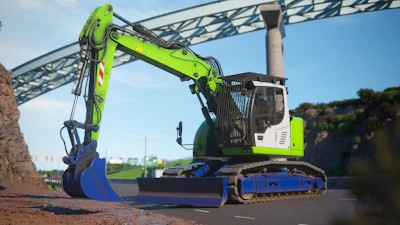
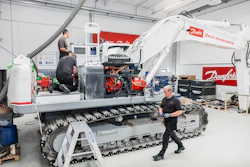
Unlike passenger vehicles, off-highway machines often operate under highly variable loads, over long duty cycles, and in extremely demanding environments. Many of them rely on hydraulic systems that have been refined over decades to deliver incredible power density and replicating that performance with electric systems remains a significant engineering challenge, particularly in larger machines. Many key components in compact excavators are already becoming electrified, including EDI spring-applied brakes and both electromechanical and electro-hydraulic actuators.Regal Rexnord Corporation
Cost is another important factor. Without the same economies of scale seen in the automotive sector, electrified solutions can carry a higher upfront cost, even where they offer long-term efficiency gains. As a result, most OEMs are not moving towards fully electric portfolios, but are instead maintaining a mix of internal combustion, hybrid, and electric platforms to suit different applications.
Taken together, these factors mean that electrification in off-highway is not stalled, but selective. Progress is being made where it makes sense — and that is where the real opportunities lie.
Where Electrification Is Already Working
While large-scale electrification remains challenging, there are clear areas where electric solutions are already delivering tangible benefits. Compact equipment has emerged as a natural starting point. Machines such as compact excavators and loaders typically operate over shorter duty cycles and in more controlled environments such as urban or even indoor settings, where the advantages of electric operation are most pronounced.
Reduced noise allows work to take place in densely populated areas or during extended hours, while the absence of local emissions allows them to operate safely in enclosed spaces such as warehouses, tunnels, or industrial facilities. In these contexts, electrification doesn’t just deliver environmental benefits but also practical ones that can expand where and how machines are used.
There is also a useful precedent in the widespread adoption of electric forklift trucks.
Over the past two decades, electric forklifts have transitioned from niche solutions to the industry standard, driven by similar factors around indoor use, controllability, and efficiency. Today, many smaller off-highway machines draw on the same underlying technologies, establishing a familiar pattern of adoption that begins with specific applications before expanding more broadly.
Bridging the Gap With Hybrid Systems
One of the useful tools in smoothing out this transition is the existence of a practical mid-point solution — hybridization.
Rather than viewing electrification as a binary choice, many manufacturers are adopting hybrid and electro-hydraulic approaches that combine the strengths of both electric and conventional systems. These solutions can deliver meaningful reductions in fuel consumption and emissions, while avoiding the need for a complete redesign of the machine.
In areas such as actuation, electro-hydraulic systems provide a practical stepping stone, offering improved control and efficiency without sacrificing the power density of hydraulics. Similarly, hybrid powertrains allow machines to operate more efficiently across a wider range of conditions, using electric power where it delivers the most benefit while retaining conventional systems for peak demands.
This evolutionary approach reflects the realities of the sector. Rather than waiting for a single breakthrough, the industry is moving forward through incremental improvements, each of which builds towards greater levels of electrification over time.
Looking to the Next Phase of Electrification
As technology continues to develop, the next stage on the road towards electrification will be to extend the technology into larger and more demanding applications. However, the success of this step will depend on advances in several key areas.
Power density remains one of the most important challenges. To compete with hydraulic systems, electric components must deliver higher forces and torques within increasingly compact envelopes. This is particularly relevant in systems such as braking and linear motion, where performance requirements are high and space is limited.
At the same time, there is growing demand for components that offer not only performance, but also greater levels of control and feedback. Electrified systems can provide detailed insight into operating conditions, wear, and system state, enabling more predictive approaches to maintenance and improving overall reliability. As machines become more connected — and, in some cases, more autonomous — this level of visibility will become increasingly important.
Hydraulics will continue to play a central role in many applications for the foreseeable future. However, as electric technologies improve, the balance is likely to shift, with electrification becoming viable across a broader range of machine types and sizes.
Designing for an Electrified Future
If OEMs are going to be ready for the future of the off-highway industry, they need to start thinking differently about how this trend will impact machine design.
Electrification is not simply a matter of replacing one component with another. It is a system-level challenge that affects how different parts of the machine interact, how power is managed, and how performance is controlled.
This is an area where experienced component suppliers can play an important role. Companies such as Regal Rexnord are increasingly working alongside OEMs early at the design stage, helping to optimize braking, actuation, and powertrain systems for electrified architectures rather than adapting them later in the process.
For example, components such as braking systems and actuators, which have traditionally been treated as secondary considerations, take on greater importance in this context. Their performance, integration, and ability to provide feedback can influence not only how the machine operates, but how easily it can be adapted to new power architectures.
This creates an opportunity for closer collaboration between OEMs and component suppliers, particularly in the early stages of development. By considering these elements from the outset, manufacturers can avoid costly redesigns, optimize system performance, and make more effective use of available space.
A Decade of Practical Progress
Over the next ten years, electrification of off-highway equipment is unlikely to follow a single, uniform path. Instead, it will continue to develop in a way that reflects the diversity of the applications it serves.
Compact and urban machines will lead the way, building on a growing base of proven solutions. Hybrid systems will play a key role in bridging the gap, enabling steady progress without requiring wholesale change. And as component technologies continue to advance, electrification will extend into larger and more demanding equipment.
The opportunity, then, is not in chasing electrification for its own sake, but in identifying where it delivers real, measurable value — and building from there. For those able to take a considered, application-driven approach and work alongside experienced partners such as Regal Rexnord, the result will not be a sudden transformation, but a steady and meaningful evolution in how off-highway machines are designed, built, and operated.





![Pr Elevat Partnership Alt 2 Final[60]](https://img.oemoffhighway.com/mindful/acbm/workspaces/default/uploads/2026/08/pr-elevat-partnership-alt-2final60.tYEpmFJlYT.jpg?ar=16%3A9&auto=format%2Ccompress&dpr=2&fit=crop&h=135&q=70&w=240)


