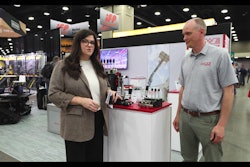

As the demand for increased efficiency continues to drive off-highway equipment design and development, fluid power systems and components play a critical part. To learn more about the latest trends in hydraulics within the off-highway mobile equipment market, OEM Off-Highway (OOH) spoke with Daniel Strati (DS), director of system applications at Bailey International. Read on for his insights.
Market Trends
OOH: What are the key advantages of hydraulic systems over mechanical or electrical systems in off-highway applications?
DS: The main advantage of hydraulic systems over mechanical or electrical systems in off-highway applications is the fact that hydraulics can manage heavier loads by providing greater force.
OOH: How do you determine the right type of hydraulic fluid for a specific application?
DS: The first and main qualifier we use is the environment in which the application is likely to be used.
OOH: What are the most common causes of hydraulic system failures in off-highway equipment?
DS: Air and water contamination are the leading causes of hydraulic failure.
OOH: Can you explain the differences between open-center and closed-center hydraulic systems?
DS: In an open-center system, flow is continuous and pressure is intermittent. In a closed-center system, flow is intermittent and the pressure is continuous.
OOH: How does temperature affect hydraulic system performance, and what are the best ways to manage it?
DS: The ideal temperature for most hydraulic systems is between 100 degrees Fahrenheit and 140 degrees Fahrenheit. This range ensures optimal fluid viscosity, efficient operation, and minimal wear on components. The best way to manage this is by using hydraulic fluid with appropriate viscosity index for your operating environment. Install cooling systems to manage high temperatures, and utilize heaters to maintain fluid viscosity in cold environments.
OOH: What are the key factors to consider when selecting a hydraulic pump for off-highway equipment?
DS: Understand your system requirements, flow pressure, RPM, size, space, fixed or variable displacement, durability and maintenance, and cost versus performance are all key pieces of information to gather when detailing system requirements.
OOH: What are some of the challenges companies face right now with fluid power?
DS: Increasing energy efficiency, improving reliability, reducing size and weight, reducing environmental impact, and improving and applying energy storage are all obstacles the industry is going to have to overcome sooner or later.
OOH: What are some challenges companies can expect to continue to face down the road?
DS: Adapting to disruption in the global supply chain, fuel price volatility, overall economic inflation, labor shortages, and the continued acceleration of electrification are hurdles that are just beyond the horizon.
OOH: What is one breakthrough technology or trend that you believe could revolutionize the off-highway industry in the next five to 10 years?
DS: Some emerging technologies that will no doubt shape the future of the off-highway industry are automation, electrification and AI integration.
Maintenance and Design
OOH: What are the most important considerations when designing a hydraulic circuit for heavy equipment?
DS: System specifications like sizing, component selection, system layout and design, safety and reliability should all be carefully considered when designing a hydraulic circuit for any application.
OOH: How do you optimize hydraulic system efficiency to reduce fuel consumption?
DS: The first thing to try is a hybrid system or smart components. Try using a variable displacement linear actuator, recovering energy with accumulators, and installing a load sense system.
OOH: What role does accumulator technology play in fluid power systems, and when should it be used?
DS: Right now, they are often used as a back-up power source or to smooth out pressure surges. They certainly have the potential to help improve the efficiency of a system by recuperating and providing a reserve of energy during peak demand times.
OOH: How do proportional and servo valves improve hydraulic system control?
DS: They provide a spool position sensor with electronic feedback to better control flow pressure.
OOH: What are the latest advancements in hydraulic filtration and contamination control?
DS: The integration of sensors and connectivity features brings filtration to higher levels. Real-time contamination monitoring allows better proactive maintenance before issues arise.
OOH: How do different hydraulic pump types (gear, piston, vane) compare in terms of performance and efficiency?
DS: Gear and vane pumps are often used in open circuit, but their constant flow rate can lead to energy losses. Piston pumps are often used in closed-circuit systems because it's easier to turn them off from a neutral position.
OOH: What are the best practices for diagnosing and troubleshooting hydraulic system failures?
DS: Portable pressure testing kits, flow meters, infrared cameras, voltage detectors, and valve tool boxes are some good methods for diagnosing hydraulic system failures. Continuous monitoring of contamination is the best way to prevent major failures, though.
Technology Trends
OOH: How is electrification impacting hydraulic systems in off-highway machinery?
DS: Small and mid-sized machines have an advantage when it comes to electrification, whereas larger machines are challenged by power demands, which makes full electrification impractical
OOH: What are the benefits and limitations of electro-hydraulic actuators compared to traditional hydraulic cylinders?
DS: For loads up to 5,000 pounds, a compact electro-hydraulic actuator is typically better than hydraulic cylinders in terms of power density, maintenance, location versatility, cleanliness and cost.
OOH: How do hybrid hydraulic systems contribute to energy savings in construction and agricultural equipment?
DS: They strengthen the fuel economy (by capturing regenerated energy), improve performance by running at the most efficient speed and torque range, reduce maintenance costs, lower emissions, increase engine life, and increase engine operating efficiency.
OOH: What role does digitalization and IoT play in monitoring and optimizing hydraulic systems?
DS: Digitalization and IoT empower production teams to predict and prevent production losses, adjust operating parameters in real-time based on changing conditions, and ensure optimal performance overall.
OOH: What new hydraulic fluid technologies are emerging to improve efficiency and sustainability?
DS: Renewable and biodegradable hydraulic fluid is an interesting trend.
OOH: How does load-sensing hydraulic technology improve machine performance and efficiency?
DS: Because the variable pump produces the flow demanded, there are fewer losses and less heat, resulting in lower oxidation rates, longer fluid life, and improved actuator control.
OOH: What are the latest trends in biodegradable and environmentally friendly hydraulic fluids?
DS: These fluids seem to offer an environmentally friendly alternative to traditional oil. In recent years, there has been a notable trend towards the development of high performance biodegradable hydraulic fluids that can match or exceed the performance characteristics of traditional mineral oil-based fluids.