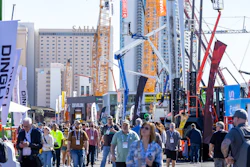
After two turbulent years, the U.S. construction equipment market showed renewed momentum at CONEXPO-CON/AGG 2026 in Las Vegas, Nevada. The event, which drew more than 140,000 attendees, reflected a positive shift in market sentiment, with rising equipment orders, easing inventories and improving manufacturer confidence.
Following the trade show, industry researchers and analysts at Interact Analysis provided its post-show analysis of the event, offering observations made by its team and highlighting trends that seem to be leading the market. The following offers a summary of the CONEXPO 2026 Tradeshow Report, which can be accessed here.
According to the report, while macroeconomic headwinds like inflation and geopolitical risks remain a concern, the dominant theme at CONEXPO-CON/AGG 2026 was a strategic pivot from hardware-centric sales to technology-driven solutions.
OEM strategies are increasingly centered on automation, AI, connected jobsites, and digital ecosystems, positioning technology and services as core differentiators rather than optional add-ons. While electrification was on display, its adoption in North America remains selective and niche-driven, with practical automation and data platforms taking center stage as the industry’s primary focus for delivering near-term productivity gains.
Market Outlook: A Positive but Measured Recovery
The overall outlook for the U.S. construction market in 2026 is positive. New equipment orders and shipments are on the rise, while inventories have remained relatively static, indicating that manufacturers are successfully clearing backlogs. A slow recovery in the U.S. housing market, with a majority of states showing positive month-over-month growth at the end of 2025, further supports the optimistic forecast.
However, this recovery is not without potential restraints. Inflationary pressure on materials continues to increase project costs and equipment pricing, which could drive more contractors toward rental options over new purchases. Geopolitical instability, particularly conflict in the Middle East, poses a risk of higher fuel prices and supply chain disruptions, which could add further inflationary pressure. The market is recovering, but long-term growth will depend on navigating these external economic challenges.
OEMs Showcase Major Product and Digital Refreshes
Major equipment manufacturers used CONEXPO to signal significant strategic shifts, emphasizing digital platforms, major product line overhauls, and a move toward becoming comprehensive solution providers.
John Deere signaled a “New Age of Iron” with one of its most significant excavator overhauls in years. The company is rolling out a fully redesigned, internally engineered excavator lineup supported by its dedicated manufacturing hub in Kernersville, North Carolina. This hardware refresh is matched by a consolidation of its digital ecosystem under the “Precision Construction Technology” banner, unifying grade management, obstacle detection, and fleet management into a core part of the machine’s value proposition.
Caterpillar focused on the expansion of scalable AI and autonomy across more machine categories, positioning these technologies as near-term solutions rather than future concepts. The company also previewed new compact machine models and emphasized its service and rental divisions, Cat Compact and Cat Rentals, signaling a strategic focus on the growing demand from rental fleets and smaller contractors.
Volvo CE delivered its largest product refresh in years, debuting 14 new or first-look machines. The company reinforced its multi-energy strategy, showcasing an expanded range of electric machines alongside improved diesel platforms. This approach frames electrification as a practical, phased transition rather than an all-or-nothing shift, aligning with current North American market realities.
Hitachi used the show to preview its upcoming rebrand to LANDCROS, a move intended to position the company as a broader jobsite solutions provider. The company's award-winning booth featured a more open, ecosystem-driven strategy, showcasing partnerships with technology firms for innovations like voice-controlled excavators (Dimaag), cab-mounted real-time survey systems (Sodex Innovations), and equipment-theft prevention platforms (Veristart Technologies).
Autonomy and Automation Get Practical
While fully autonomous jobsites remain a long-term vision, CONEXPO-CON/AGG 2026 demonstrated that automation is moving from concept to practical, productized solutions. A key trend was the rise of retrofit autonomy, which lowers the barrier to entry for contractors by allowing them to upgrade existing mixed fleets rather than investing solely in new premium equipment.
Gravis Robotics, which used the show to launch its U.S. expansion, won a CONEXPO-CON/AGG "Next Level Award" for its Gravis Rack, a retrofit kit of sensors and controls that can upgrade a machine’s guidance to full autonomy via software. Similarly, Bluelight Machines and Dynapac North America demonstrated a collaboration for autonomous compaction, showing the technology integrated on a production soil roller. This highlights a trend toward anchoring autonomy in specific, high-utilization tasks.
Remote operation also emerged as a tangible solution to the industry’s persistent labor shortages. A demonstration by Hitachi and Teleo featured a skilled operator remotely controlling a wheel loader and an articulated dump truck located 500 miles away, switching between the machines instantly. This “supervised autonomy” offers a scalable way to leverage the skills of a single operator across multiple machines, improving efficiency and addressing the challenge of finding specialized operators for every jobsite.
Electrification Remains a Niche, Though Growing, Market
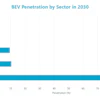
In stark contrast to major European trade shows, the buzz around electrification at CONEXPO was more subdued, reflecting the North American market's early stage of adoption. While nearly every major OEM displayed electric machines, their application remains concentrated in niche areas where they offer a clear advantage, such as indoor work, urban jobsites, or emissions-restricted environments.
Infrastructure limitations, particularly the availability of charging on jobsites, remain the primary barrier to wider adoption, along with contractor concerns about battery life and performance in demanding duty cycles. Companies like Case launched new electric models, including the TL100EV mini track loader, aimed squarely at these specialized applications. Meanwhile, companies like First Green Industries stood out with a portfolio of production-ready, fully electric compact loaders, positioning them ahead of competitors whose comparable offerings remain in the concept phase.
Global Ambitions and Component-Level Innovation
The show also highlighted the accelerating global ambitions of China-based manufacturers. Lingong Group made its global debut as a consolidated brand, positioning SDLG and LGMG under a unified identity aimed at North America and Europe. With an expanded lineup of electric and intelligent equipment and a new global service platform, "LGMG ProCare," the group signaled its intent to aggressively grow its market share, using its manufacturing base in Mexico as a launchpad for the North American market.
At the component level, suppliers demonstrated a trend toward offering integrated systems designed to reduce engineering complexity for OEMs. Moog introduced its Adaptive Electrification Management System (AEMS), a pre-integrated modular electronics architecture for electrified machines. JCB Powertrain announced it would offer its DualTech VT transmission, which combines hydrostatic and mechanical drives, to third-party OEMs for the first time. These moves show how the supply base is evolving to provide more complete, standardized solutions that can accelerate an OEM’s time to market for new technologies.