7 Industry Experts on What's Influencing Off-Highway Product Development
When it comes to shaping the product development roadmap, many factors affect the planning and outcome of future innovations and releases, including emerging customer needs and regulatory pressures. Hear from seven top leaders on the challenges facing today's off-highway OEMs.
Original equipment manufacturers (OEMs) and their component suppliers and partners face an array of challenges, concerns and outside influences that ultimately play a larger role in the outcome of product designs and integrations, as well as partnerships and rollouts. To learn more about which emerging customer needs and regulatory pressures are having the strongest influence on OEMs' product development roadmaps for 2025, 2026 and beyond, OEM Off-Highway spoke with several of the industry's top analysts and OEM component leaders across the industry. Read on for their insights.
Chloe Mason
Market Analyst Interact Analysis
Stricter EU cybersecurity and safety regulations are pushing development toward smarter, more connected machines. The pace of impact on product roadmaps for 2025 and beyond will depend on how quickly OEMs redesign machine architectures to support advanced electronics, while customers continue to demand safer, more automated and reliable equipment.
Enrique Busquets
Vice President - Business Area Leader Mobile Hydraulics Bosch Rexroth
The source of components and products was a highlight in 2025. We expect this topic to continue to be of interest, as well as how to prepare for alternatives that minimize operational and commercial impacts.
On the technical side, customer engagement and interest in product safety, especially for electronically controlled components, is increasing. Automation, as well as its norms to ensure safety-related systems, is also a very relevant topic in recent years. These are areas that we will continually expand by creating software features that can support an easy integration that meet customers’ needs.
Daniel Winter
President Danfoss Power Solutions
The need for higher levels of efficiency is a key product development driver at Danfoss. This comes from both customer and regulatory pressure. More efficient machinery reduces fuel consumption, thereby lowering operating costs as well as emissions. In electric machinery, efficient subsystems extend battery runtime or reduce the number of battery packs required, improving the business case for EVs. Legislation may require OEMs and suppliers to consider the impacts of a machine throughout its lifecycle, which means assessing end-of-life options such as remanufacturing and recycling. We see sustainability shaping machine systems toward increasing levels of efficiency and circularity in the years to come, and we are meeting these demands with our expertise in both hydraulics and electrification.
Steve Hornyak
CEO Turntide Technologies
In 2025, hybrid system development skyrocketed. Fortunately, the axial flux motors and power electronics we develop are ideal for hybrid systems as well as electric. We expect to see this continue in earnest into 2026. Hybrid is not a stopgap but a solution in itself. Because of range or power requirements and a desire to leverage existing platforms versus ground up development, some vehicles and equipment will remain hybrid for the foreseeable future.
Our customers also face implementation challenges when moving to electric or hybrid systems. Pairing and implementing motors and inverters take time and effort to provide an efficient and effective drivetrain. Partnering with a company that can remove this challenge and provide customizable, paired systems simplifies this challenge and speeds time to market.
A focus on a systems approach to design will also continue into 2026. We see manufacturers needing full integration and a preference for getting a full drivetrain from one manufacturer to ensure efficient and effective operation. Piecing together a drivetrain with different manufacturers for each component can be fraught with problems and development delays.
We aim to provide the full system for our customers, which is why we launched our Turntide Turnkey Solutions partnerships last year, with Bonfiglioli as our first partner. This remains a top goal as we move into 2026.
Emission regulations, especially in Europe, affect new designs of off-highway equipment. With tightening regulations, as with battery regulations in the UK, component suppliers must stay ahead of the requirements.
Dylan Rewoldt
Director of Sales Vanguard Commercial Power
Two main drivers shaping our product roadmap are the need for jobsite access in regulated environments and the operational need for productivity. While environmental mandates dictate where equipment can operate, the financial realities of our customers dictate the long-term adoption of a solution. Consequently, our development strategy prioritizes power solutions that ensure compliance without compromising profitability and productivity.
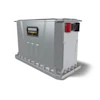
Regulatory influence has shifted from general sustainability goals to immediate market access constraints. Increasing municipal requirements for low-emission and low-noise zones are limiting where standard equipment can operate. Contractors in construction and commercial turf need machinery that qualifies for indoor projects, noise-sensitive urban areas and restricted operating hours. This drives our development of a scalable commercial battery lineup, enabling OEMs to deploy zero-operating emission equipment that meets these strict standards while delivering the power density required for these applications.
Operational efficiency is the second major influence. Equipment owners are scrutinizing total cost of ownership (TCO) more closely than ever, focusing on reducing downtime and service costs while maximizing the equipment's usable lifecycle. We are responding by optimizing runtime and maintenance across our lineup. For electrification, our swappable battery systems help to eliminate charging delays and keep crews moving. For internal combustion, we continue to refine our engine portfolio and leverage technologies like Oil Guard, which extends maintenance intervals and helps to reduce operating costs.
Finally, the technical complexity of modern equipment is forcing a shift in how OEMs source power. Manufacturers are moving away from piecing together individual components and are demanding complete, unified power solutions. This heavily influences our product roadmap, pushing us to provide fully integrated electric systems. By managing the BMS and integration internally, we allow OEMs to meet emerging market demands faster and with greater reliability.
Julien Le Vély
Director Global Marketing and Sales John Deere Power Systems
The voice of our customers is the strongest influence on our product roadmap. As they navigate the complex balance between regulatory compliance and machine productivity and operating margins, our role is to provide options, not barriers, to make sure these external pressures do not limit their potential.
By prioritizing customer choice, we are shaping a roadmap that offers a versatile range of validated solutions. This approach allows our customers to navigate these challenges with the specific power technology that best fits their business and their bottom line. Regardless of the product selected, we see a clear signal from the market: Sustainability cannot come at the expense of performance or uptime. With this understanding, we are prioritizing solutions that allow OEMs to meet regulatory targets without sacrificing the performance their customers rely on.
We are preparing for future emission standards not just by updating aftertreatment systems, but by fundamentally optimizing our next-generation diesel engines to be more efficient and compatible with renewable fuels. We view the use of renewable fuels — specifically biodiesel, renewable diesel (HVO), and ethanol — as an essential factor in our engine strategy. For instance, all John Deere Final Tier 4/Stage IV and Interim Tier 4/Stage IIIB engines are now approved for use with B30 biodiesel blends, an increase from the previous B20 limit. Additionally, our Tier 3/Stage IIIA and lower-tier engines without exhaust filters can use up to 100% (B100) biodiesel. For heavy-duty applications, the internal combustion engine remains the primary workhorse, and our focus is on ensuring that it remains a viable long-term solution.
For segments prioritizing lower operating costs and reduced noise, we are developing targeted hybrid and battery-electric solutions. Leveraging KREISEL battery technology allows us to tailor high-performance products to meet these exact needs. Our goal is to right-size the power source to the application, so that whether a customer chooses diesel or electric, they receive a validated solution backed by the comprehensive support needed to keep their operations running.
Darren Tasker
Vice President of Industrial Sales Volvo Penta
Regulatory requirements and growing sustainability expectations continue to be major drivers of our product development, as customers face increasing pressure to reduce environmental impact without compromising performance or uptime. We rely on our Tier 4 Final engines, for example, to help them meet emissions regulations while also balancing compliance with capability, reliability and total cost of ownership.
This balance is becoming especially critical in fast-growing sectors like data centers, where demand for reliable backup power, energy-efficient systems and remote charging capabilities is accelerating alongside Environmental, Social and Governance (ESG) expectations. Volvo Penta is focused on helping customers address these needs through dependable power solutions designed to support both operational resilience and long-term sustainability goals.