OEMs building electric equipment should use fully integrated power systems instead of assembling components from multiple vendors, which creates software conflicts, performance gaps, and delays. A pre-validated, single-source solution combines the battery, motor controller, motor and charger to eliminate technical friction and accelerate time to market.
- Piecemeal assembly creates three critical problems: software protocol conflicts across components, performance gaps under heavy load, and complicated serviceability across multiple vendor warranties
- Integrated 48V systems combine battery packs (1.5kWh to 7kWh, scalable to 70kWh), motor controllers (up to 660A at 95% efficiency), and chargers in one pre-validated stack
- Single-source solutions save engineering hours, reduce technical risk, and enable faster time-to-market compared to custom component integration
- Dedicated engineering support through the Power Application Center helps OEMs handle battery architecture, software protocols, and power electronics during machine development
- U.S.-manufactured systems backed by 8-year commercial warranty provide reliable foundation for scaling from prototype to high-volume production
*This article is sponsored by Vanguard
For original equipment manufacturers (OEMs), building an electric machine is an opportunity to redefine equipment performance, lower operating costs and deliver cleaner, quieter power to the jobsite. But unlocking those benefits depends on how the power system is designed from day one.
Specifying a traditional internal combustion engine used to mean matching horsepower, torque curves and mounting footprints. Electrification introduces its own set of challenges: balancing cell chemistry, power electronics, thermal management and digital communication protocols across the entire machine.
A piecemeal approach to designing an electric machine with varying components can create integration friction. Sourcing off-the-shelf parts from multiple vendors leads to software conflicts, vendor finger-pointing and project delays.
To bring equipment to market faster, manufacturers must step away from patchwork assembly and leverage a fully integrated full-stack system designed specifically for off-highway demands.
The Friction of Patchwork Assembly
Assembling power components from different suppliers introduces technical hurdles that add engineering costs and delay product launches. When OEMs attempt to build a powertrain piece by piece, friction typically emerges across three critical areas:
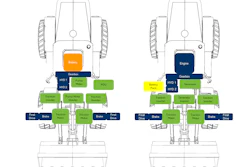
- Software and protocol conflicts: Modern electric powertrains rely on clean CANbus communication across the BMS, motor controller, telematics and vehicle control unit. When components from different vendors run incompatible software protocols, engineering teams spend weeks troubleshooting fault codes and tuning power delivery.
- Performance gaps under heavy load: A high-output electric motor cannot deliver its rated power if the battery pack cannot match its continuous current demands or operating temperatures. Without co-engineered thermal management and power controls, the machine loses capability right when operators need peak performance.
- Serviceability and physical packaging: Harsh jobsite conditions test equipment durability. Managing separate warranties across multiple vendors slows down field support and makes it complicated to determine the root cause. Furthermore, component suppliers frequently change hardware form factors as technology evolves, forcing OEMs to redesign equipment architecture to accommodate new dimensions.
When integration is handled piece by piece, the OEM takes on all the technical work and risk of making those separate components function as a unified system.
The Single-Source Solution
Vanguard eliminates these custom engineering headaches by delivering a single, pre-validated 48V stack. To save on engineering hours spent getting mismatched components to communicate, Vanguard delivers a single-source solution that combines the battery, motor controller, motor and charger.
 Vanguard
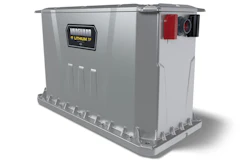
The system starts with Vanguard™ fixed and swappable lithium-ion battery packs, available in modular capacities from 1.5kWh1 to 7kWh1. For larger power demands, Vanguard battery packs can scale in parallel up to 10 units to deliver up to 70kWh. Each pack features a rugged, IP-rated enclosure and an integrated BMS that monitors cell health, state of charge and operating temperatures in real time. For high-utilization applications, swappable battery configurations allow operators to swap packs seamlessly, maintaining continuous operation across long shifts without charging downtime.
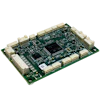
Within Vanguard's integrated system, power management relies on motor controllers that deliver peak phase currents up to 660A at over 95% operating efficiency. Built to automotive-grade standards, these controllers feature auto-tuning and configurable regenerative braking while aligning directly with the battery's discharge curves to deliver smooth, predictable torque.
Vanguard motors provide a simplified, one-to-one power delivery solution for equipment traditionally powered by an engine. Built with standard SAE J609 engine mounting patterns, these motors integrate directly into existing machine architectures. They offer maintenance-free performance with IP66 protection against jobsite dust and moisture.
Completing the stack, Vanguard battery chargers offer flexible on-board or off-board mounting. They plug directly into standard 120-volt or 240-volt outlets while communicating directly with the BMS to manage charging cycles and protect battery life.
Engineering Support Through the Power Application Center
Many OEMs have engineering teams that excel at designing and building traditional gas-powered machinery, but navigating battery architecture, software protocols and power electronics brings a different set of technical requirements. Partnering with Vanguard gives manufacturers access to dedicated electrification support, allowing internal engineering teams to focus on core machine design while Vanguard handles power system integration.
Backed by over a century of application experience, Vanguard operates the Power Application Center (PAC) that acts as a direct extension of an OEM's design team. By combining proven power solutions with hands-on technical guidance, Vanguard helps manufacturers meet their performance and electrification goals with total confidence.
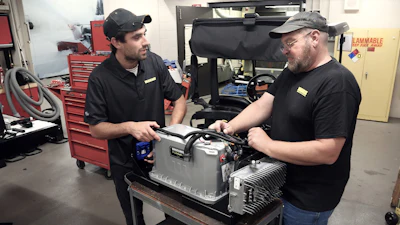
PAC engineers collaborate with OEMs across key phases of machine development. They begin the process by analyzing real machine field data to calculate exact battery capacity requirements rather than relying on rough estimates. From there, engineers set up software and firmware profile Vanguard
From Prototype to High-Volume Production
Electrifying specialized equipment should not be a trial-and-error process. By choosing Vanguard's proven system integration over individual component assembly, OEMs eliminate technical risk, shorten time to market and deliver market-ready machines to their customers.
Featuring commercial battery systems designed, engineered and assembled in the U.S. and backed by an 8-year commercial limited warranty2, Vanguard gives equipment manufacturers a reliable foundation to scale from prototype to production.
1 Total energy measured using a 0.2C discharge per IEC 61960-3:2017
2 See vanguardpower.com/na/en_us/support/warranty.html for warranty details.